ARC Raiders and The Great Shadow of Sickness: February 2026 - Monthly Roundup

Whereas Weeknotes provide a brief summary of the weeks' affairs and a selection of relevant photos, Monthly Roundups act as a retrospective on video games, albums, books, movies, essays, and television programs that defined my month. Accompanied below are my thoughts on them, including how I engaged with them, but also what I consider praiseworthy and subject to fair critique.
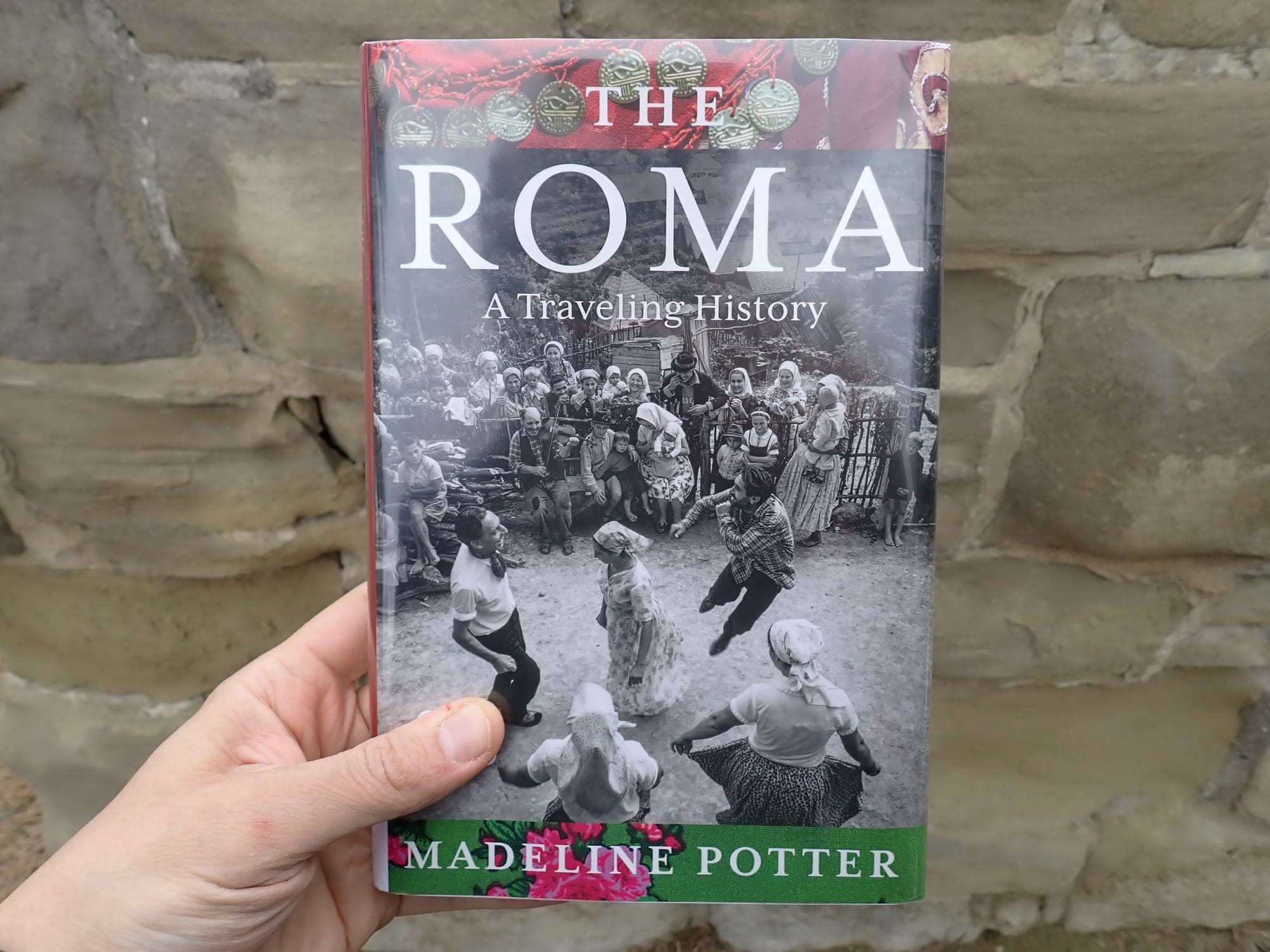
The Roma: A Traveling History by Madeline Potter (Book)
The bigoted rants of my own British-Canadian grandfather were my first introduction to the Romani people as a boy. Though I was knowledgeable of his anti-Semitism and where that rhetoric led European Jews during the 20th century, the Roma were unknown to myself. His characterization of the Roma as travelling vagabonds was standard for the time and still is in many parts of the world. Madeline Potter, a Romani who grew up in post-communist Romania before migrating to the U.K., is no stranger to this anti-Roma hatred and the lasting intergenerational trauma felt by this diverse and resilient people. As the author of The Roma: A Traveling History, she guides the reader across Europe and the U.S. to showcase the history, culture, and contemporary issues of the Romani. Each chapter focuses on the Romani experience in a particular country. The chapter, whether it is based in Bulgaria or Spain, provides opportunities to narrow in on the variance within the global Romani diaspora (called vitsas) ranging from Muslim Roma to the Kàlo of Scandinavia, but never fails to highlight unifying cultural traditions or lived experiences. It included discussions regarding garments, jewelry, traditional crafts, dance, and music, but my personal favourite topic pertained to the diversity within Romani architecture. The descriptions of vardos and kastellos emphasized the unique beauty of the Roma culture and I enjoyed looking at these buildings online. One of the challenges I had with this book was the character profiles of famed Romani folks. Not because these profiles were not interesting, but rather due to how I felt it disrupted the flow of the chapters. As another note, whilst I am hit-or-miss when it comes to memoir-style non-fiction books, I found that Madeline Potter does a fantastic job putting her lived experiences into the broader discussions within each chapter. By the time I ended the book, I left with much greater understanding and empathy for an underappreciated, resilient, and unique people.
"The non-Roma often think of their lives as books, with new chapters and turning pages. That's not how I see things. I looked out of the window and saw hills flash in and out of sight. Life is a road: winding, swivelling, beautiful."
- Madeline Potter in The Roma: A Traveling History
Arc Raiders (Video Game)
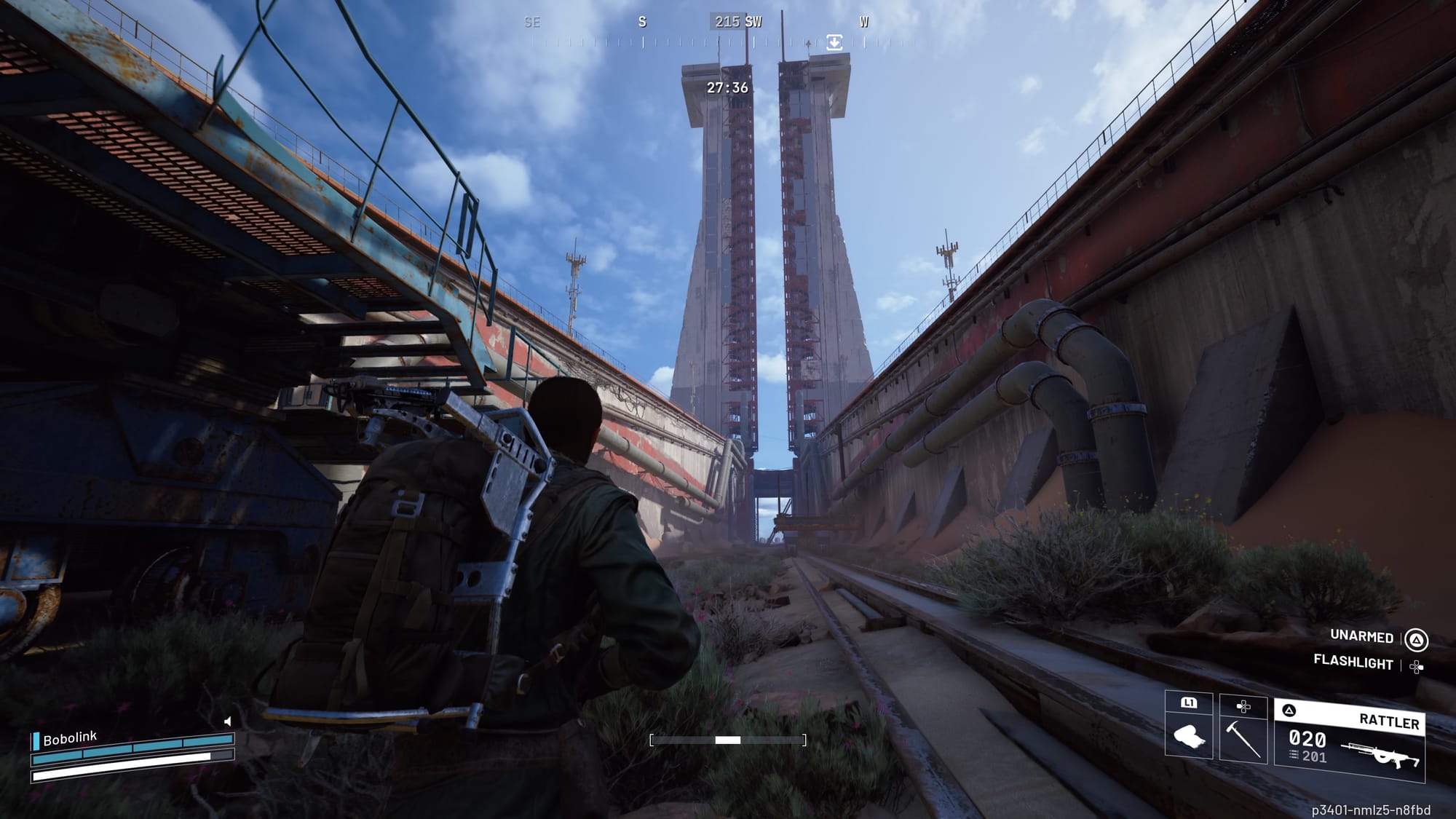
Embark Studios, the developers of The Finals, released Arc Raiders on the 30th of October 2025. With Escape from Tarkov and Hunt: Showdown being contenders in the extraction shooter genre, Arc Raiders entered the fold and won the hearts of gamers (myself included). In an extraction shooter, players enter a session, face off against AI enemies, search around the map for valuable loot, and hopefully extract from the session alive and enriched. If you die during the session, you lose all the weaponry and gear you brought into the session – as well as anything you looted so far. The caveat is that other players are present during this session and their unknown intentions create a sense of tension that is invigorating. Each extraction shooter has their own unique gameplay mechanics and aesthetics, along with a player community that defines how live service games like this evolve. And as is often the case, I adore Arc Raiders and continue to come back to it for the player community more than anything.
The narrative lore behind Arc Raiders is to put it simply: (1) Earth's human population faced collapse due to climate breakdown and artificial intelligence, (2) the wealthy abandoned the planet and went to space, and (3) those left-behind worked to establish subterranean communities (like Sperenza) and send raiders to scavenge topside for essentials. This is a challenging task, because as a raider, you often find the threat of the game's penultimate AI enemy known as ARC machines to be exceptionally intelligent and vicious (compared to similar games within the genre). Make a reckless dash between buildings or overstay your welcome looting? These ARC machines will relentlessly follow you, readjust position when damaged, call for assistance, and generally fuck up your day. Their brutality creates a tension and this is amplified with the presence of other players.
And it is these other players who make the exceptionally tantalizing game – especially when entering a session solo (which creates more space for player interactivity). With loot on the line and ARC machines hovering overhead, competing with other players is a real option. An opportunistic player with a bolt-action rifle can take out a struggling victim of ARC machines. A deceitful player with explosives can betray a group of friendly collaborators upon stumbling upon some much-prized loot. But still, whilst PvP is an element of this game, players are just as likely to cooperate towards a common cause. This teamwork can include assisting another player with directions, providing medical support to a fallen raider, or working together to defeat the titular Matriarch. This tension between competition and cooperation, along with the blurriness in-between, is at the heart of my enjoyment of this game. Though I have my rare moments of opportunism, I lean towards cooperation and I have largely received more assistance from others than harm. I am going to continue playing this game, as it is a live-service game and content is refreshed over time, but you likely won't hear me talking about this game on the monthly roundups for awhile (until major content updates come).
"Kill yourself."
- A random player after I downed them right before extraction in Arc Raiders
Year of the Rat: Undercover in the British Far Right - Harry Shukman (Book)
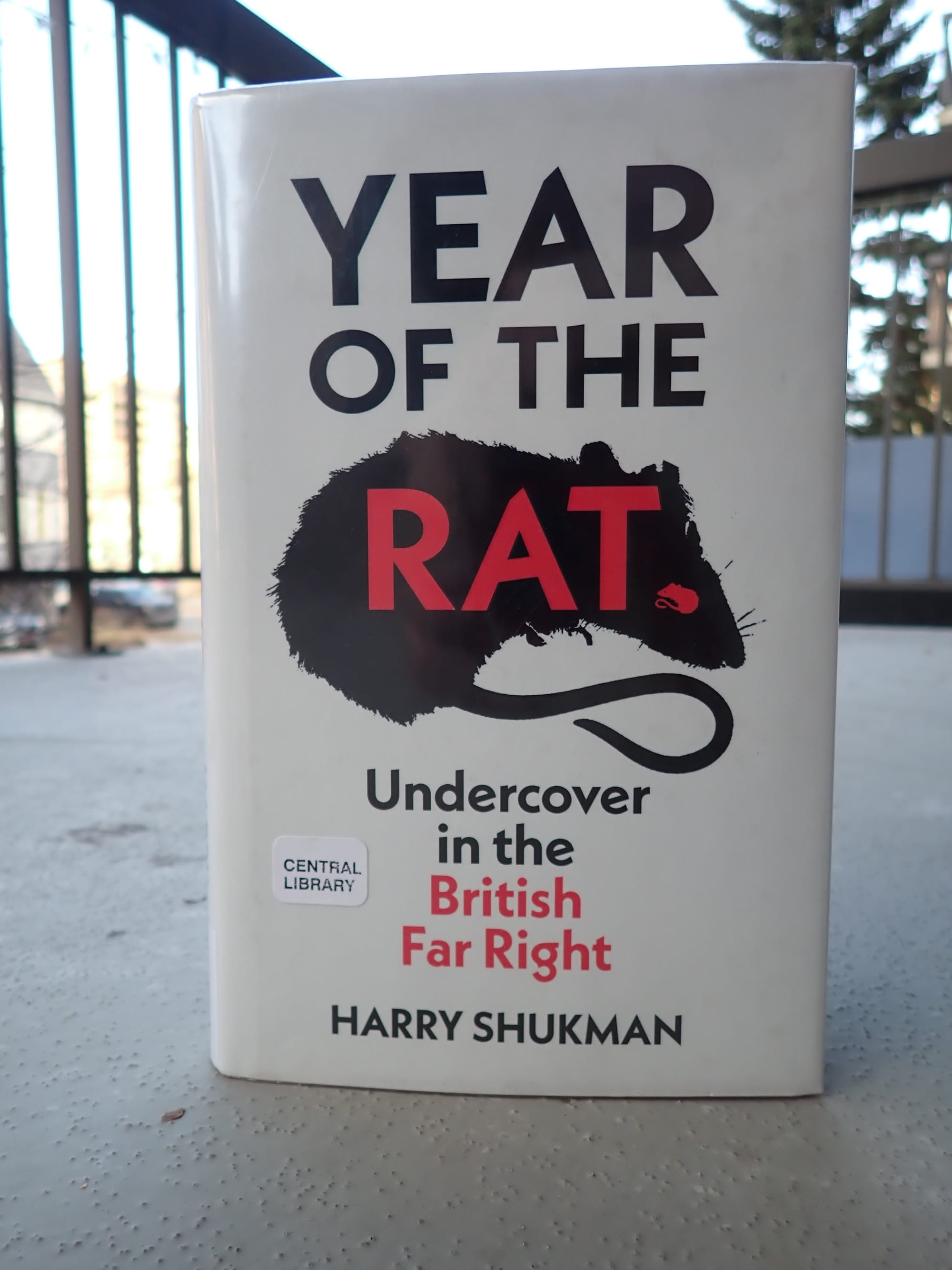
Last year, I read Patrick Strickland's You Can Kill Each Other After I Leave: Refugees, Fascism, and Bloodshed in Greece – which detailed the Greek far-right and how these extremist groups unleashed chaos from the streets of Athens to seaside refugee camps. This year, in a similar fashion, but on the other side of the continent, I read the accounts of Harry Shukman and his infiltration of the British far-right in a story reminiscent of the 2015 movie BLACKkKLANSMAN. Harry takes on the identity of Chris and proceeds to spend a year investigating a myriad of unsavory characters and organizations, including a far-right offline network known as the Basketweavers, young white identitarians, Britain First campaigners, holocaust deniers, pronatalist influencers, Silicon-Valley-backed proponents of "race science", and establishment party insiders with an obsession with racial demographics. Throughout the entire operation, Harry Shukman slowly integrates himself within the far-right political scene to better understand this heinous movement and the power behind its recent resurgence. To do so, there are times where "Chris" must ingratiate himself to them by doorknocking for fascists or buying a round of pints for racist losers. But there are times where he records terrifyingly revealing conversations or his cover is nearly blown. This is a tightrope he walks constantly and it is suspenseful. But ultimately, we are left with a series of vignettes of the British far-right that demonstrate their characteristic brutality and paranoia, but also showcases a modern sophistication that should bring concern to anyone paying attention to the deterioration of Western liberal democracies.
"Whether or not these groups succeed depends on their maintenance of an illusion, that they are less extreme than they appear to be. Even though many of them believe a silent majority supports them, they know that their views are unpalatable to many."
- Harry Shukman in Year of the Rat: Undercover in the British Far Right
DOOM: The Dark Ages (Game)
I mean this with the utmost respect, but I could not give less of a shit about the story. Who is Prince Ahzrak? Don't care. What is he planning? Don't care. And how will the humans overcome the threat of the demons? Me. And why I am, the protagonist, fighting? To kill demons. With this distracting narrative nonsense out of the way, let me cut to the chase: does Doom deliver on its ultraviolent power fantasy. Fuck yeah bud. When I am playing Doom, I want destroy demonic hordes with absurd levels of gore-driven fervour that rivals the most sanguine-soaked of paladins. Yeah, there are combat shotguns, machine guns, and grenade launchers, but the strength of this game is how ID Software continues to conjure new ways to kick ass. And in DOOM: The Dark Ages, which descends hard into Medieval motifs, the arsenal is incredible. For your ripping and tearing pleasure, we have a flailing mace, an automatic weapon that shatters the skulls of demons and shoots out bone fragments, and of course: a shield with a rotating chainsaw that I can fucking toss (my personal favourite). And whilst the gigantic mech suit is cool for punching demonic titans, there is also a dragon to soar the skies on. Yeah, a dragon. All together, I had a blast with this game!
"All the power of Hell cowering before one man."
- Prince Ahzrak in DOOM: The Dark Ages
The Power of Parting: Finding Peace and Freedom Through Family Estrangement by Eamon Dolan (Book)
This book discusses familial abuse and the lasting impact it has on its victims. The specific focus, however, pertains to the experience of family estrangement. As a victim of family abuse and someone who decided upon estrangement, Eamon Dolan is no interloper and has a personal stake in the issue. Throughout the book, he infuses his own experiences into the broader discussion, but also ensures that the experiences of others are highlighted. The book is divided into four parts. Part 1 explores familial abuse in general, with a focus on the forms it can take, the prevalence of familial abuse within our society and the cultural views on the issue itself. It also begins to discuss the lasting impacts on the victims – notably Complex Post-Traumatic Stress Disorder (abbreviated to CPTSD). In Part 2, the author explores considerations that victims of family abuse should taken into consideration when going through the process of estrangement. For Part 3, Eamon Dolan affirms that whilst challenges can exist with family estrangement, the liberating benefits are often profound. But effort must still be put into healing going forward, which can look different for everyone, ranging from IFS therapy to journaling. In this part of the book, the author also debunks common myths, which is helpful in solidifying estrangement more firmly as a legitimate and wise decision. Lastly, for Part 4, he discusses the importance of addressing family as a society. Ultimately, it was a great book, but I got less utility from it than anticipated. This is primarily due to the fact that my family estrangement has been gradual over the years, breaking into no-contact territory last spring. If others were beginning to process, I am sure they would find this more useful.
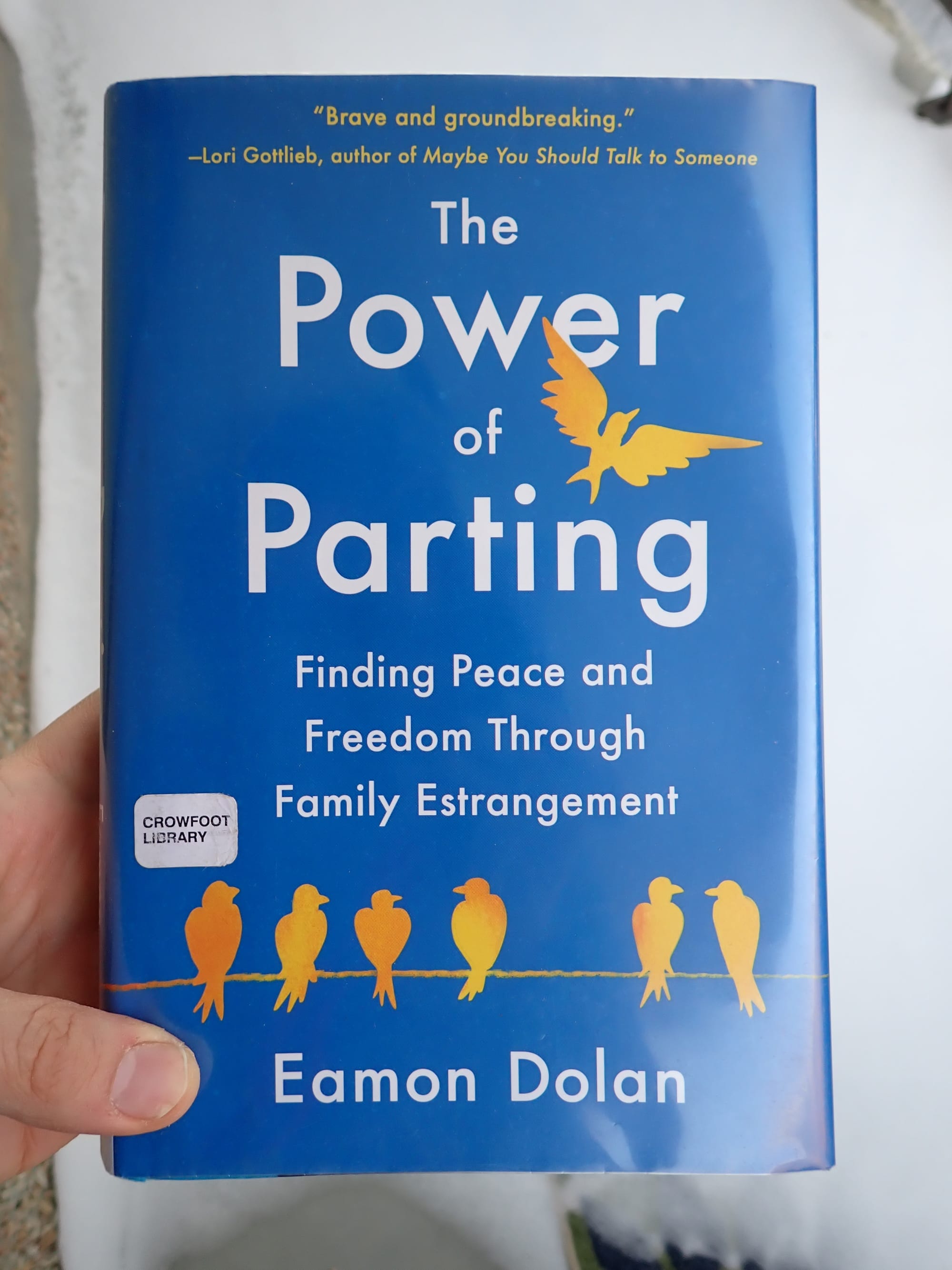
"Every child deserves the freedom to grow up without abuse, and every society has the obligation to enshrine and protect this freedom, in part by discouraging would- be abusers from wreaking their torment."
- Eamon Dolan in The Power of Parting: Finding Peace and Freedom Through Family Estrangement
Frostpunk (Video Game)
Whilst I bought 11 Bit Studio's Frostpunk on Steam and PlayStation years ago, I finished my first playthrough this month. Compared to Frostpunk 2, the first entry in the franchise is more intimate. In this regard, instead of the emphasis on the factional conflict and the statistical balance sheets of the second game, Frostpunk 1 focuses on a more limited, but nonetheless, relentless challenge to a smaller population of survivors: the cold itself. The main campaign opens in the late Victorian Age with the arrival of 80 British survivors who have managed to reach a generator and hope to find security from a novel global ice age. Like many strategy games, resources (like coal, steel, wood, food, and steam cores) must be managed appropriately, but there is little forgiveness for mismanagement and the player will find themselves increasingly pushed towards desperate situations beyond their control as resources scarcity amplifies, more survivors arrive, and the temperatures continue to plunge to extreme levels. Metrics like discontent and hope exist to reflect the crisis as it unfolds. But there are "options" for the player to consider. The player, acting as the settlements' Captain, must enact decisions that test moral boundaries. Food rations running low? Sawdust makes an "acceptable" food additive. Short on labour? The children yearn for the mines. These decisions have an impact and can shift your potential for survival greatly. After several attempts at the main campaign, I used the combining forces of automatons and the Faithkeepers to complete the game with a mere eight survivors. Whilst much of the resources were stored for the increasingly dire final storm, which acted as an endgame crisis/penultimate boss, the generator did not maintain the heat within the city's homes and frostbite ended dozens of lives.
Also, this game has one of the best soundtracks for a strategy game. Like seriously.
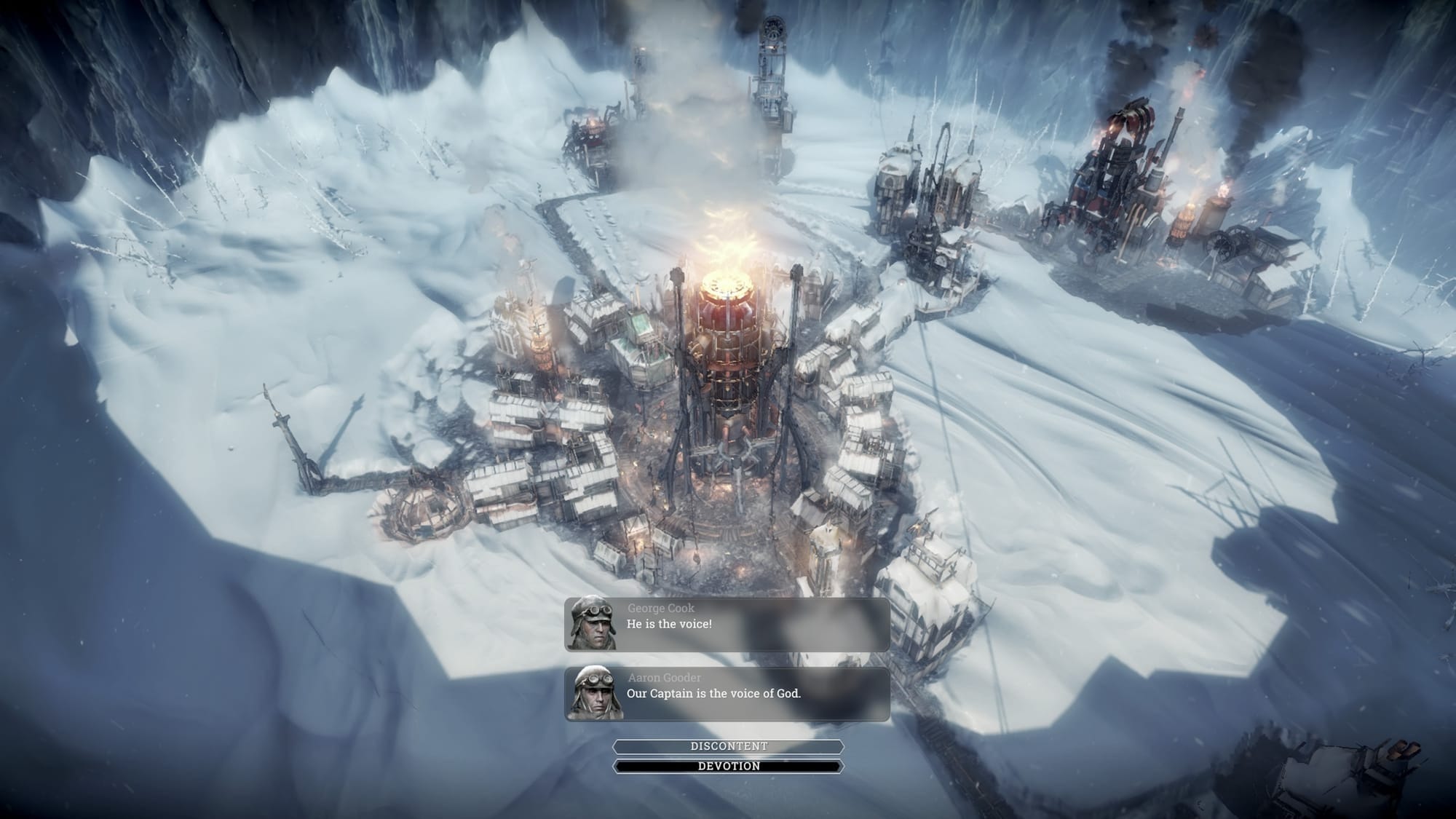
"Dawn breaks and the streets are silent. You've declared your laws God's will, branding all who oppose you as heretics. Everyone who was a threat to the unity of our city and the New Faith has been dealt with.
Citizens died. The others have renounced their views. Hope will never be a problem again. No one will think in these terms anymore."
- An event narration in Frostpunk
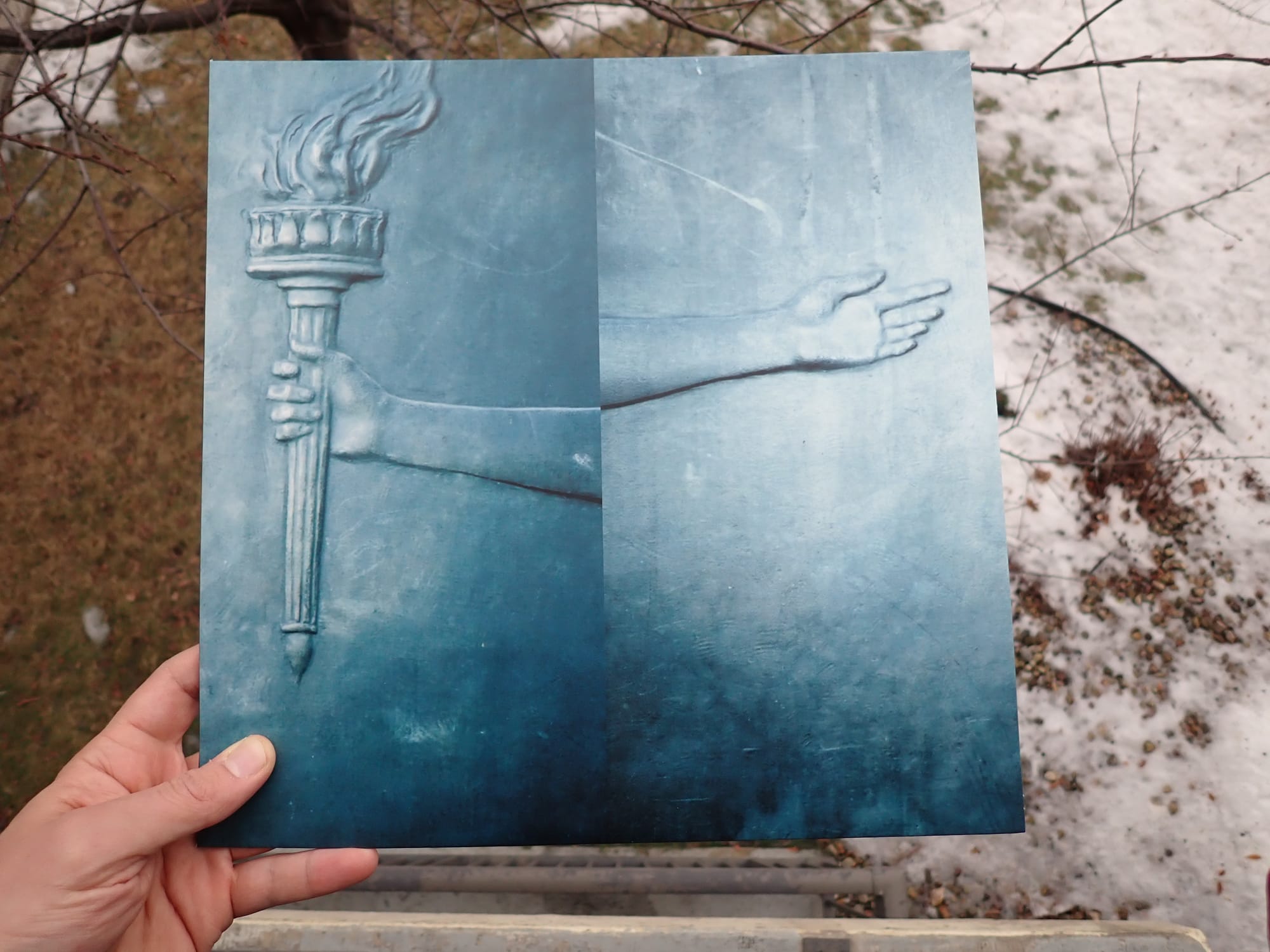
The Argument by Fugazi (Album)
A few months ago, I started listening to Fugazi and I am better for it. Based in Washington D.C., this post-hardcore band was a staple of the 90s punk scene and defiantly resisted the cardinal sin of their times: selling out. Their final album, Argument, was released in the autumn of 2001 and it is incredible! This is a noisy album that sheds the guitar so properly. Adding to this, The Argument is very balance with no side of the record being supreme to the other. Personal highlights from this album include "Epic Problem", "Full Disclosure", "Nightshop", and "Argument."
"I'm sure you have reasons, a rational defence
Weapons and motives, bloody fingerprints
But I can't help thinking it's still all disease"
"Argument" - Fugazi
The Great Shadow: A History of How Sickness Shapes What We Do, Think, Believe, and Buy by Susan Wise Bauer (Book)
Personally, the book I'd like to most strongly recommend for this months is Bauer's The Great Shadow: A History of How Sickness Shapes What We Do, Think, Believe, and Buy. This history book is a humanistic tale of our species' long cultural relationship with sickness and how it has evolved through the millennia. For as long as we have roamed this planet, we have sought to explain and respond to the maladies that stalk and bring death to our communities. From the emergence of early urbanized human settlements. this has been an societal experience that warranted deep consideration and frenetic activity. We sought salvation through the divine and attempted to balance our humors. We relieved ourselves of pain and feared outsiders. We dissected cadavers for clues and interrogated our human passions for clarity. We discovered the nature of germs and declared an fear-induced antibacterial war that heralded the rise of disposable goods and sanitary cities.
And of course, within the last century, we developed life-saving antibiotics, vaccines, and other medical marvels that we have fundamentally revolutionized our civilization's relationship with infectious disease. The global change was so immense that "childhood deaths plummeted by more than 90 percent" – which "earned another label: the Great Mortality Transition". Yet, Bauer is no eternal optimistic and makes the tension of our moment clear: "The Third Epidemiological Transition brings us fully into the age of fragility, with all of the fears and doubts that come along with it. The reaction to newly emerging diseases (and we could go on and on: toxic shock syndrome, swine flu, SARS, tick-borne Lyme disease, hantavirus, more and more) throws us all the way back to previous centuries." And as observed again and again, the cycle continues. And though I can scoff at the anti-vaxxers, I too carry outdated and sticky Hippocratic beliefs regarding illness, even though I know better. Perhaps that is why I adored this book, because though the graphic descriptions of cholera and tuberculosis were challenging at times, I have an obsessive mental preoccupation with health and wellness. And in that regard, I am more similar to my ancestors than I often imagine.
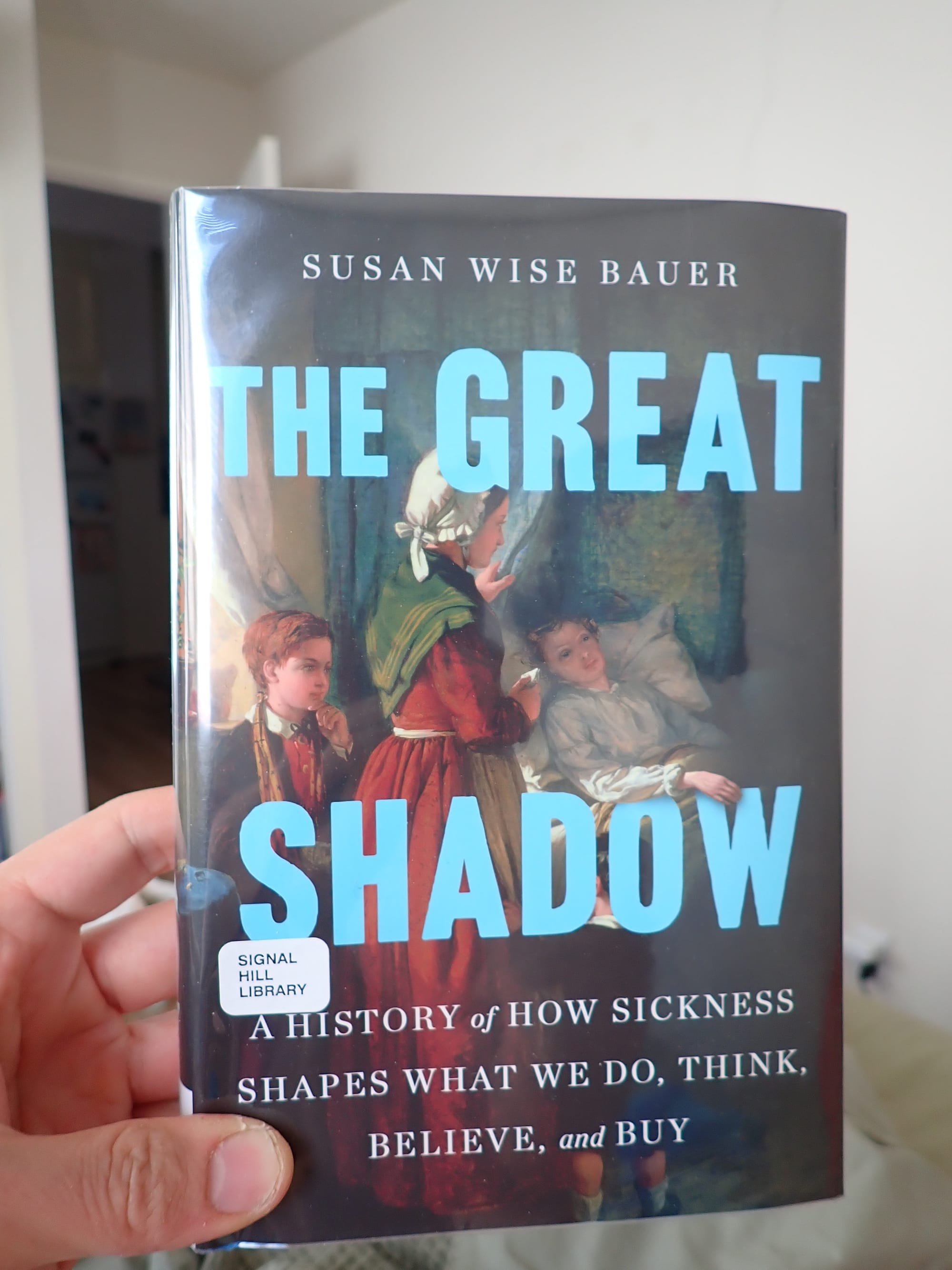
"Striving for wholeness and balance, for moderation and temperance: these all seem like worthy goals to us. But we have carried over, from Hippocratic times, a complicated and lingering sense of failure when our lives do not flow with ease."
- Susan Wise Bauer in The Great Shadow: A History of How Sickness Shapes What We Do, Think, Believe, and Buy