Ghost of Yotei and the Bernie Goetz Shootings: March 2026 - Monthly Roundup


Whereas Weeknotes provide a brief summary of the weeks' affairs and a selection of relevant photos, Monthly Roundups act as a retrospective on video games, albums, books, movies, essays, and television programs that defined my month. Accompanied below are my thoughts on them, including how I engaged with them, but also what I consider praiseworthy and subject to fair critique.
Ghost of Yōtei (Game)
Ghost of Yōtei is an action-adventure game developed by Sucker Punch Productions and set in 1603 on Japan's northernmost major island: Ezo (known as modern-day Hokkaido). During the early 17th century, Ezo can best be understood as a frontier region that tested the Japanese state and its ability to solidify power over the north. In this regard, tension (and subsequently conflict) with feudal warlords and Ainu alike was a sore spot for the regime and kept control over the region sporadic at best. You play Atsu, a mercenary returning to the island after fleeing as a child, with one goal in mind: get revenge on the Yōtei Six for massacring her family sixteen years ago.
After a brutal prologue, Atsu is free to explore Ezo and begins her quest to enact vengeance on the Yōtei Six. During this odyssey, you'll learn to master several weapons, including dual katanas, yari, odachi, and tanegashima (among others). In addition to these weapons, there are items like smoke bombs, metsubushi, and kunai for quickfire use too. All of these tools at your disposal are only as good as your ability to parry and dodge. There are also other considerations to account for. You may opt to sneak into an enemy compound to carry out lethal assassinations under the cover of darkness or you might consider countering varied enemy types with the appropriate weapons. All of these eventually comes to flow together exceptionally well, with combat feeling crisp and impactful. Beyond combat, the lifestyle activities are beautiful. From cooking salmon at a freshly lit campfire to strumming the shamisen at a towering vista, there is plenty to do to soak further into the rural idyllic world of Ezo. Adding to this is the PlayStation 5 controller's haptic feedback, which amplifies the player's immersion in the world, whether you are ink painting or working at the forge.
The world of Ezo during the early 17th century is a wonderous place indeed. From the rolling fields of Tokachi Range to lush forests of the Nayoro Wilds, the landscape is the romantic embodiment of idyllic countryside living. Putting Elden Ring aside for a moment, I have taken more screenshots of this game than anything else. The landscapes are so stunning. And the grand narrative itself is a wonder too. On the surface, this is a story rooted in revenge. Thematically, I often find this type of plot to be tedious, but here, it would be more accurate to frame Atsu's character arc as an exploration of trauma, but more specifically: how trauma shapes our understanding of who we are and the decisions we make in life. The legendary title bestowed upon Atsu after the prologue is "Onryo" a name that means ghost. I cannot think of a better title for someone who not only unleashes terror after nightfall, but is haunted by her past as well.

"We learn the most when our belly is empty and back is at the wall."
- Sensei Takahashi in Ghost of Yotei
Fear and Fury: The Reagan Eighties, the Bernie Goetz Shootings, and the Rebirth of White Rage by Heather Ann Thompson (Book)
Her 2016 Pulitzer Prize-winning Blood in the Water: The Attica Prison Uprising of 1971 and Its Legacy received critical acclaim and I imagine that her delve into the Bernie Goetz shootings will find similar reception. Because it is clear here, that Heather Ann Thompson has an incredible talent for delivering phenomenal narrative histories. Her writing balances accessibility for general readership and a careful depth that honours the practice of being a historian itself. She begins her 450+ page book by providing a prologue to the deterioration of New York City in the late 1970s and the lasting impacts of the city's drastic austerity measures. During those years, public funding into municipal social services, education, and infrastructure is slashed in the pursuit of balanced budgets. Consequently, this austerity pushes many of the city's urban poor into dire economic conditions with rampant crime and the AIDS epidemic amplifying the worsening situation. In a pressure cooker like this, blood pools on the floor of a subway carriage. The cause of this bloodshed? A middle-aged white man guns down four black teenagers down with an illegal Smith & Wesson Model 38. The reason for that senseless violence was just that: senseless. And it was admitted by Bernie Goetz himself. Yet, anti-black racism, tabloid journalism, and right-wing politics fused together in the mid-80s to create an environment where Bernie Goetz would be deemed a folk hero by many New Yorkers.
Heather Ann Thompson chronicles the subway shooting itself, but much of the book is oriented around the trial; both in the courtroom and and the court of public opinion. And though judicial jargon and legal antics might sound dull, I wish to inform you that you are mistaken. Thompson has marshalled her writing skills to create such an engaging and easy-to-follow flow to her book, that the achievement is remarkable to say the least. Whether it is the teenagers, legal teams, witnesses, or Bernie Goetz himself, she has provided such vibrancy to this history – a history that could easily become lost in its own details. But without sacrificing that nuance, she brought this moment in New York City's history to life and we are better for it as readers. But in any case, the broader message of the book is so painfully obvious that the American public might consider themselves numb to it at this point, but it bears repeating: the Bernie Goetz shootings demonstrate, again and as usual, that racial dynamics define justice more than anything.
Also fuck Rupert Murdoch and the New York Post.

"By 2024 this perspective was utterly mainstream. It was clear by now that the decade of the 1980s had mattered to the future at ever level. Bernie Goetz's decision to take his fury out on the most vulnerable people he encountered had been fueled and vindicated by a racial rage that would continue to percolate. This is what would make it possible for men like George Zimmerman to walk free so easily after killing boys like Trayvon Marin. It is what would allow Kyle Rittenhouse to evade prison and become a folk hero. It would make Trump's ascendancy to the White House possible and ensure that his supporters could do anything they wanted to do to keep him in power. And it would guarantee that Daniel Penny did not serve a day in prson for killling Jordan Neerly."
- Heather Ann Thompson in Fear and Fury: The Reagan Eighties, the Bernie Goetz Shootings, and the Rebirth of White Rage
The Once and Future Sex: Going Medieval on Women's Roles in Society by Eleanor Janega (Book)
This is a concise, accessible, and witty exploration of the role of women during the Medieval Ages within the European context. In beginning that exploration, Janega starts by providing a briefing on the philosophical and religious ideas (examples include Greco-Roman philosophy and Christian theology) that placed women within their respective private and public contexts. Both private and public experiences for women were, as is the case often, defined by men and their perspectives on women. For much of the book, Janega demonstrates how powerful patriarchal systems of power were in conveying and enforcing rigid beauty standards, draconian ideas of women's sexuality, and subservient labour arrangements. All of this was predicated on the belief that women were not only secondary to men, but also a threat in their own right – just as Eve was in Genesis. But in the final chapter of The Once and Future Sex: Going Medieval on Women's Roles in Society, Eleanor Janega brings her book together fantastically. Put forward is a simple, but far idea: though differences certainly exist between the Medieval World and today, the cultural idea of women being secondary to men has maintained itself for millennia. This patriarchal idea has modified itself throughout history, but still dominates, which as argued, should make us question our self-applauding myopic view of ourselves within the broader historical record.
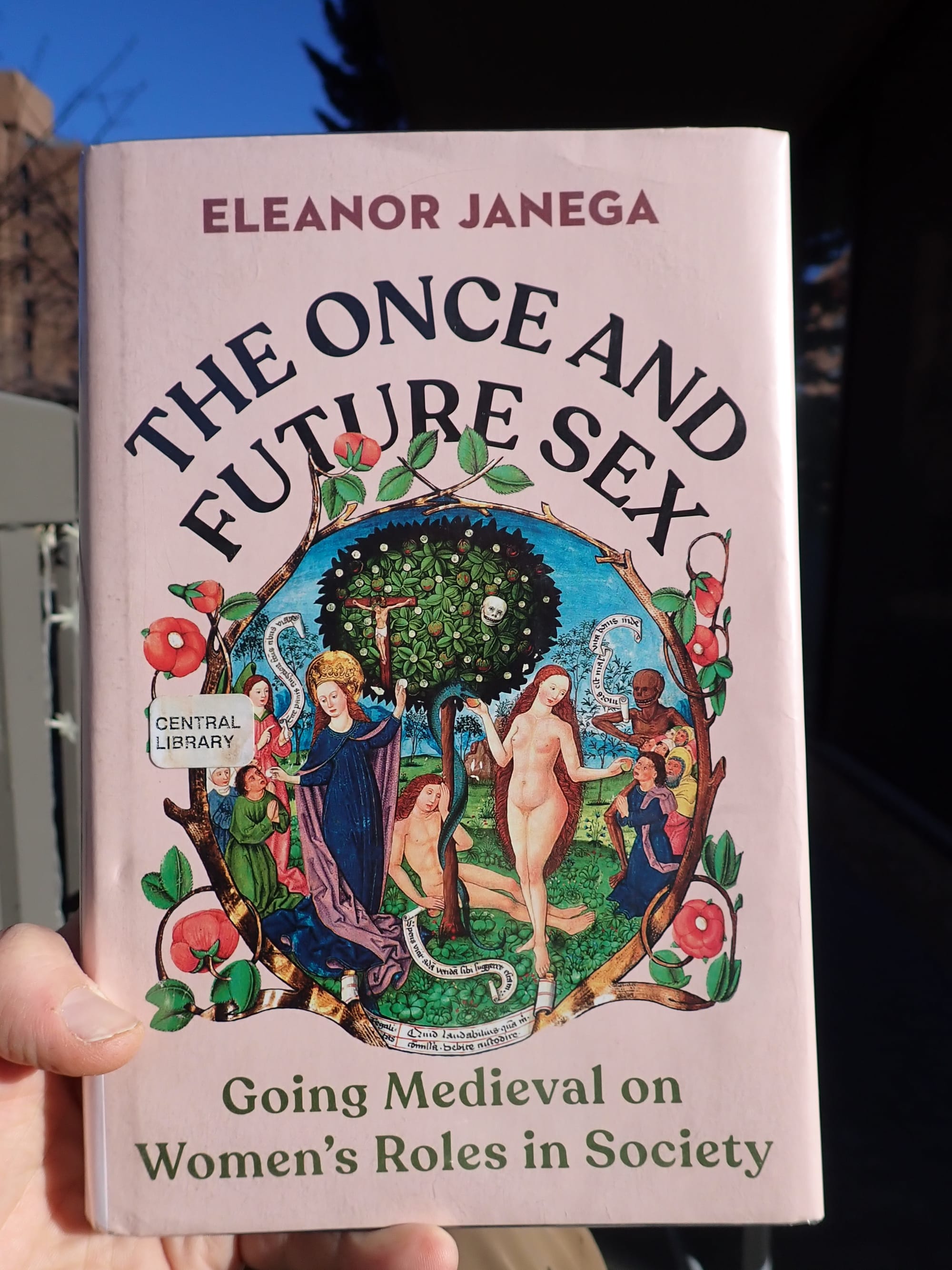
"To tell ourselves that we are the newly liberated, women-respecting heroes is to ignore millennia of women who got up, did their jobs, took care of their kids, and were every bit as engaged in and integral to society as men where."
- Eleanor Janega in The Once and Future Sex: Going Medieval on Women's Roles in Society
Culture Creep: Notes on the Pop Apocalypse by Alice Bolin (Book)
This is an original collection of seven essays written that are oriented around millennial women, late-stage capitalism, and postfeminism. My favourite essays within this collection are "The Enumerated Woman" and "Real Time." In the former, Alice Bolin discusses her experience with the Fitbit and discusses the broader idea of digital activity tracking (which I always find interesting). For the latter, she chronicles her pandemic-era obsession with Animal Crossing: New Horizons. I really enjoyed her considerations into the debate regarding "time-travelling" as a cheat, Animal Crossing's paratextual and supplementary content, and the rationale behind the Update 2.0's "dream island."
Whilst I found enjoyment and thoughtfulness in her essays, I found that there were two glaring weakness throughout the collection. Firstly, though personal anecdotes have their place within essay-writing, I found this collection leaned very heavy into that self-indulgence – which came at the cost of thematic consistency. Secondly, within many of these essays, I observed a noticeable lack of focus and found myself truly struggling to follow Bolin's thesis. I enjoy tangents from time to time, but the editing needed to trim down the word count, narrow focus, and deliver more of a punch. As a whole though, the broader themes of the essay collection were honoured appropriately (especially when viewed as a sum of its varied parts). That being said, I did find Sophie Gilbert's Girl on Girl: How Pop Culture Turned a Generation of Women Against Themselves delivering a much more thorough and impactful examination of millennial women and the concept of postfeminism. It could be argued that this is an unfair comparison, but it has likely influenced by reading of these essays.
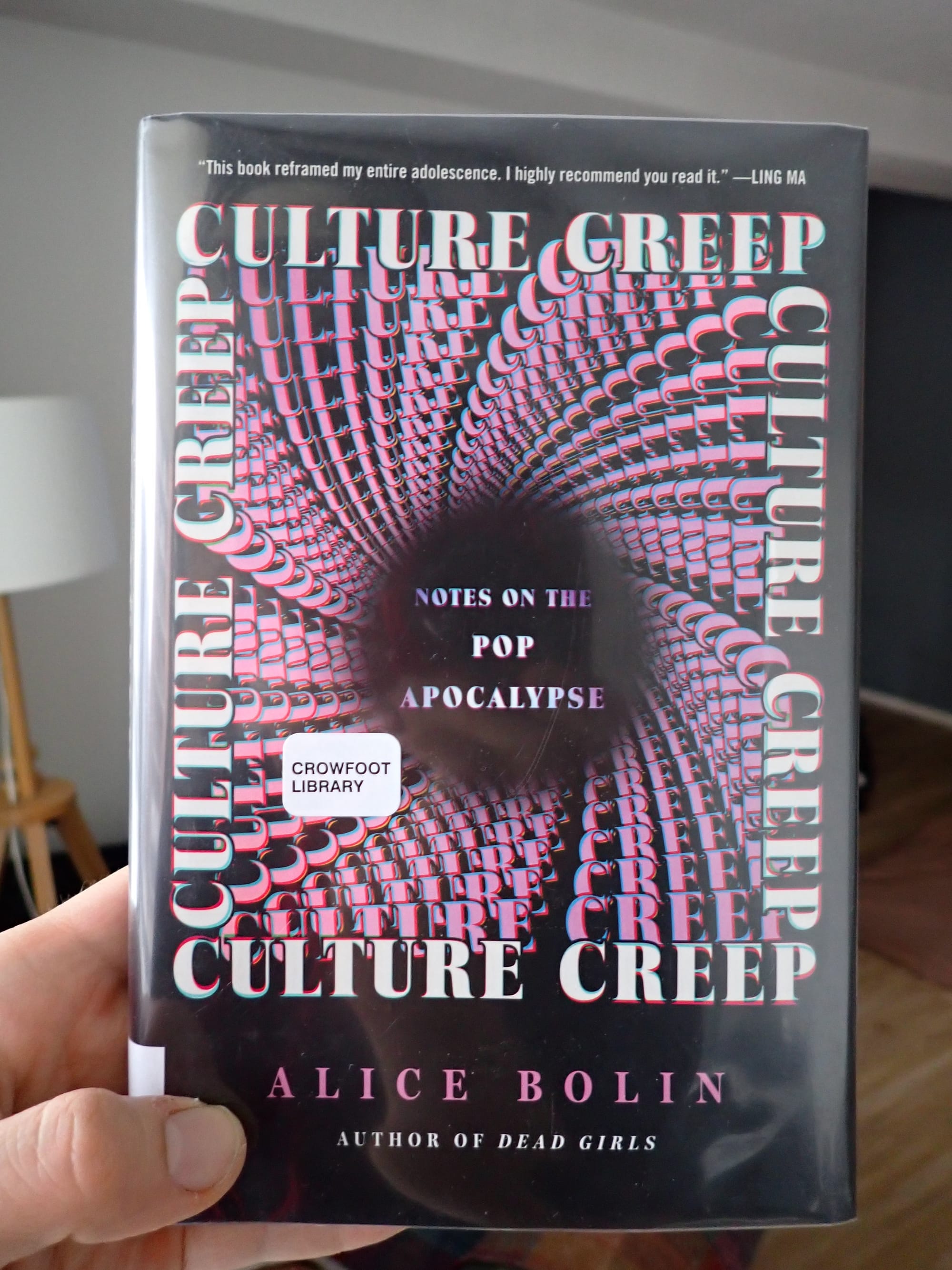
"Far from being an age of rapid technological advances, this wave of capitalism has been marked by consolidation and stagnation. Neoliberal regimes use the supposed political virtues of centrism and compromise as a way to rebrand the weak-state totalitarianism they have reigned in, with seemingly opposed political parties all representing the interests of industry and finances. And all the while, corporations have been seeking to eliminate alternatives to themselves."
- Alice Bolin in Culture Creep: Notes on the Pop Apocalypse
Automatic Noodle by Annalee Newitz (Book)
Annalee Newitz' Automatic Noodle is charmingly hopeful slice-of-life novella that opens with an atmospheric river event pummeling a newly-independent, but war-torn California – specifically San Francisco. To respond to the flooding, a ghost kitchen's robotic staff awakens and finds themselves long-abandoned in the derelict restaurant by their owners. But given the ghost kitchen's questionable legal grounds and the bot's nascent civil rights following the war, the four robotic food service workers and an undocumented migrant set up and run their own noodle shop. Hijinks ensue. It was a fun read and given the brevity of this cozier speculative fiction, there is little to discuss, though one could appreciate the author's allusions to the invisibility of migrant labour and the food service industry poking through upon occasion.
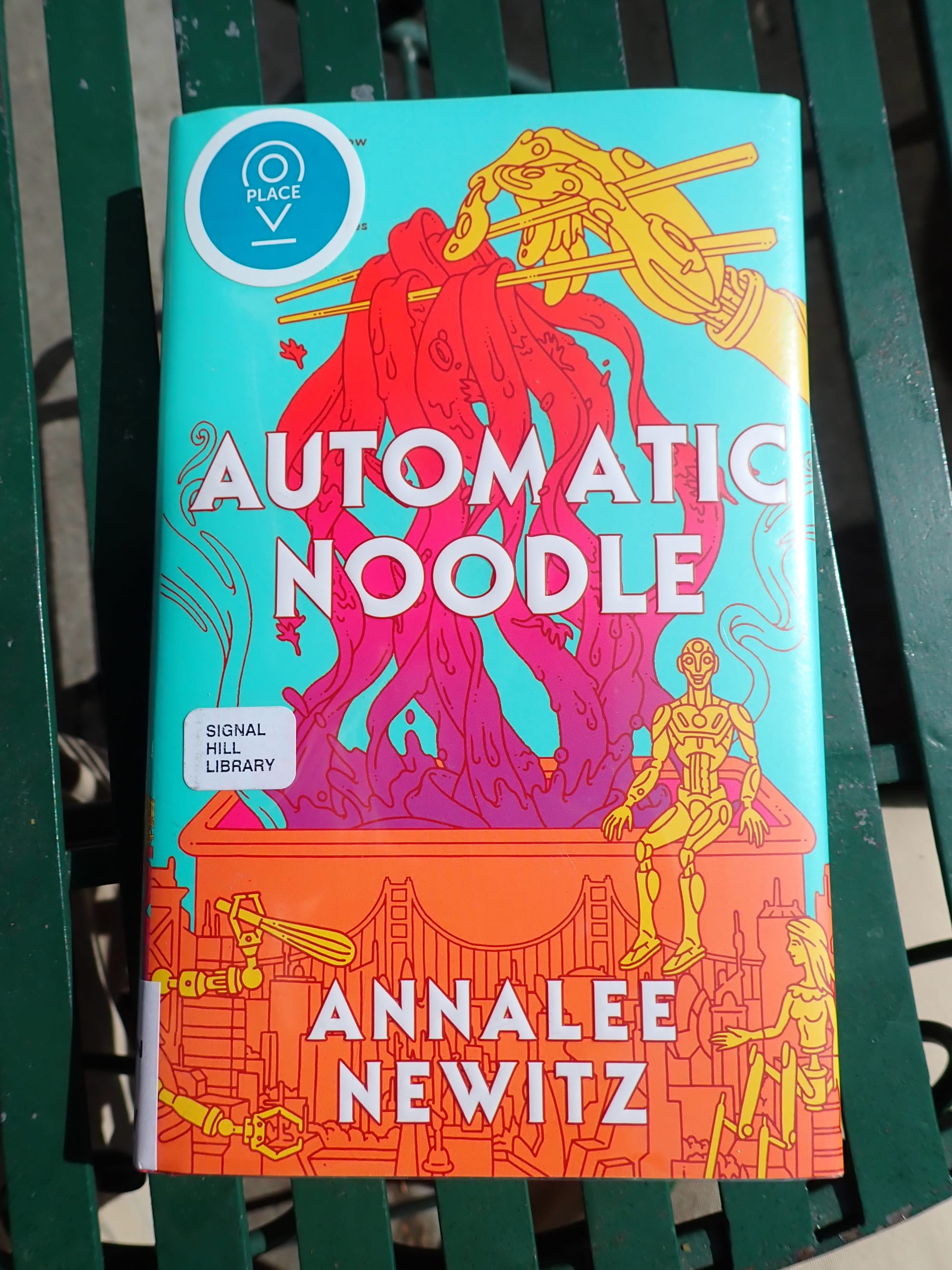
"Humans had a ritual of putting things on, implanting things, to show who they were inside. She was on the opposite path, a simpler one, showing who she was on the inside by taking off the outer layers. Bots understood that. But humans couldn't imagine nakedness as truth. They needed adornment."
- Annalee Newitz in Automatic Noodle
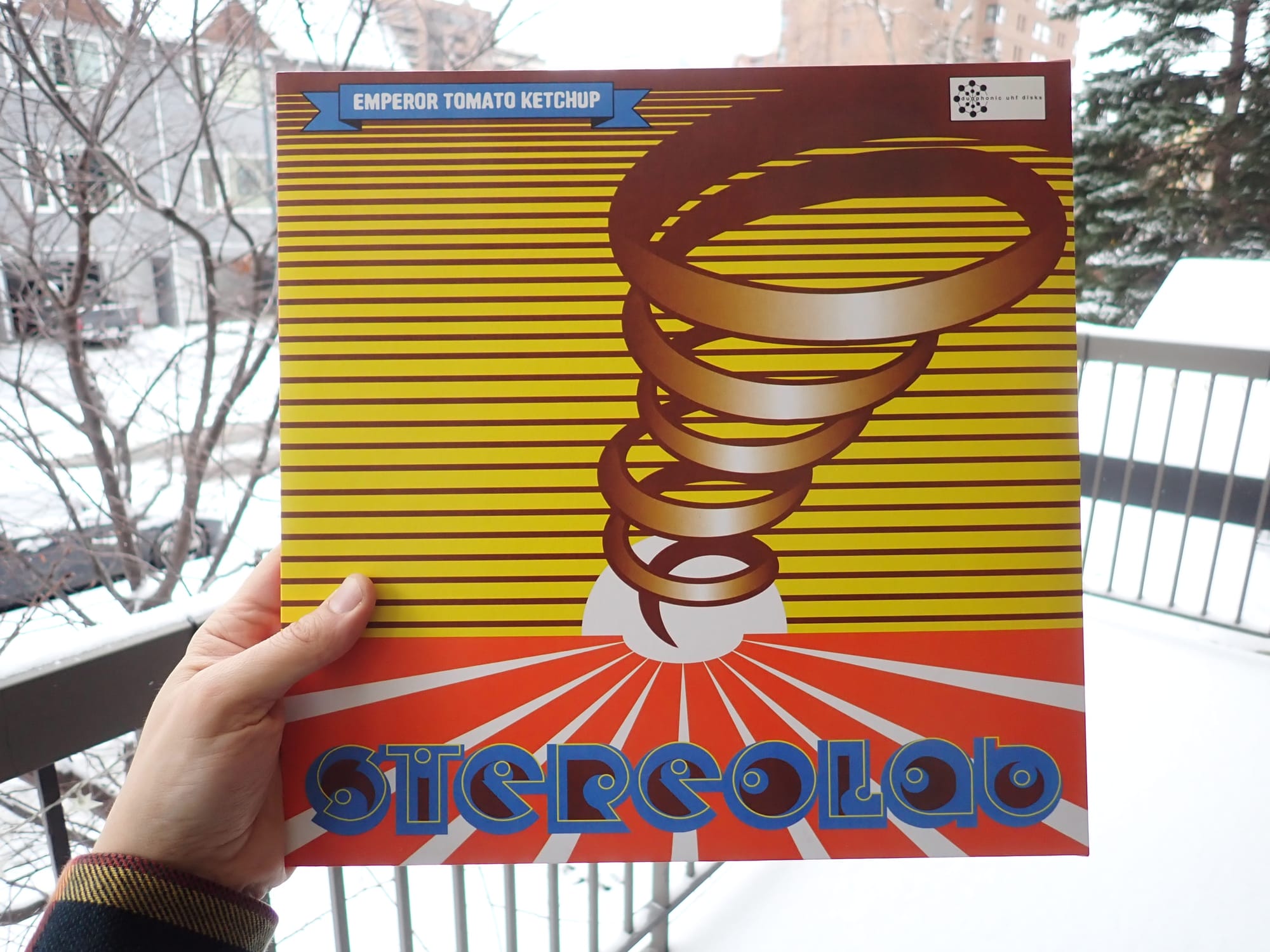
Emperor Tomato Ketchup by Stereolab (Album)
As a new listener to this band, I found Stereolab's 1996 album Emperor Tomato Ketchup to be enchantingly quaint. Much of the album has a subtle nostalgia-glazed sound that invokes a trance-like state. It borders psychedelic at times and can sound repetitive (though I would argue that is the allure here). Many of the lyrics bounce between the English and French language, though there is a challenge in really hearing the lyrics in general – which is fine to me. In any case, I really enjoyed this album with key highlights being "Metronomic Underground", "Cybele's Reverie", "The Noise Of Carpet" and "Slow Fast Hazel", and "Les Yper-Sound."
"Divide everything
Just put it all flat
Justification
Don't think now, you just fight
Make 'em opposites
So there's a reason
Stigmatization
Okay, now we can fight"
"Les Yper-Sound" - Stereolab
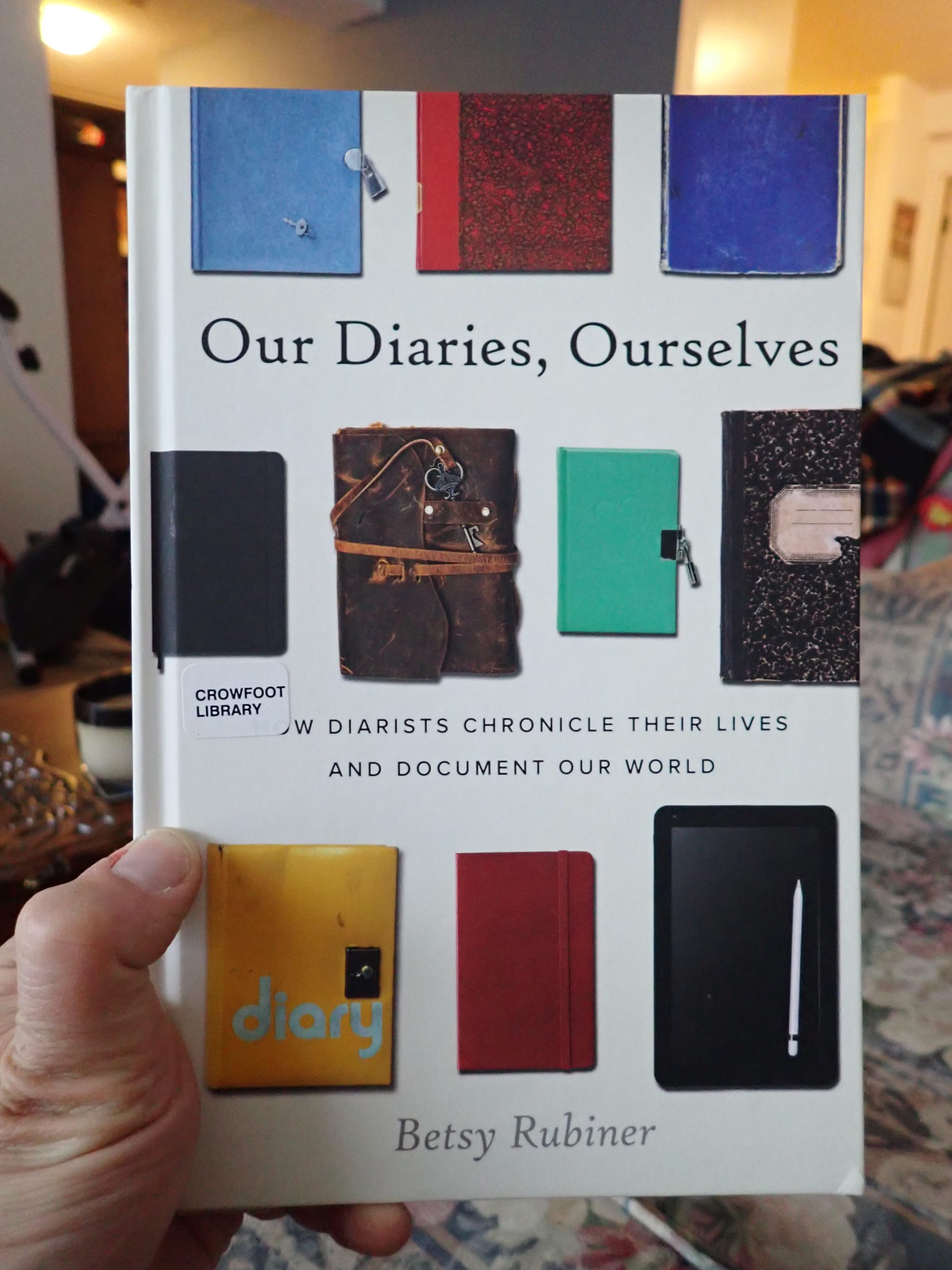
Our Diaries, Ourselves: How Diarists Chronicle Their Lives and Document Our World by Betsy Rubiner (Book)
A lifelong diarist herself, Betsy Rubiner explores the medium itself in this nuanced ode to diaries. She begins by discussing where diaries exist within the broader concept of "life writing". This idea of life writing might sound self-explanitory, but challenges emerge when considering how to differentiate between diaries, autobiographies, and memoirs. Key to Rubiner's understanding of the diary is both "dailiness" and "self." But again, this brings up questions when once considers similar written forms, digital or otherwise, such as journals, social media posts, and blog entries for example.
She explores diary-writing as a self-help practice, a means of creative expression, and a method of fostering and reinforcing memories. But with an admirable intellectual curiousity, she resists the hype regarding this written form she adores so much and honestly confronts scholarly dissent on the matter. And while benefits exist for diary writing as a practice, there are certainly over-stated benefits (if not unsubstantiated). As an additional note, controversial issues related to burning or sharing burn ones' diary are explored too. But the books' emphasis, however, is placed on the value that diaries have not to their authors, but readers. Diaries, whether read as a historical primary source (often assisting in producing social histories of ordinary and underrepresented peoples) or as a practice of building empathy for common readership, Betsy Rubiner is unapologetic in her support for preserving these "ego-documents." She even goes so far to explain the decision-making and process behind her own decision to donate her diary upon her death. And these are not odd decision. To my surprise, massive festivals and numerous archives are dedicated to celebrating and safeguarding these texts – no matter how ordinary!
By the time I finished this book, I was considering what would become of this blog and my bullet journals once I die. Whilst some diarists might prefer destroying their life writing, I think I'd prefer that my writing be donated to an archive. Maybe someone will be interested in how many cups of coffee I drank, what my views on municipal politics are, or how I spent my weekends. I doubt it would be intriguing, but I digress.
"I hadn't expected to feel other readers' presence so soon. Now, however, when I get in bed, prop a pillow behind my head, read for my diary on the nightstand (it's there!), and start writing I sometime sense other readers looking over my shoulder."
- Betsy Rubiner in Our Diaries, Ourselves: How Diarists Chronicle Their Lives and Document Our World
Links, Longreads, and Video Essays
- Local independent journalist Jeremy Klaszus, delves into the origins of Calgary's CTrain free fare zone and its recent precarity due to TD withdrawing its corporate sponsorship.
- The Norwegian Consumer Council takes aim at the anti-consumer practice of enshittification through a tongue-in-cheek and light-hearted video.
- CBC's Andrew Chang explains the total infeasibility of Albertan secession given the political realities.
- The Guardian's Kirsty Major discusses the concept of video essays and where the artform stands within our current media landscape.
- Drew Gooden is concerned about the surge in online gambling over the past decade and the harm it is causing the wider public.
- Brian David Gilbert's surrealist song about getting a tiny little lip balm at the dentist (and not a song about the bombing of Iran).