Return of the Obra Dinn: May 2026 - Monthly Roundup

Whereas Weeknotes provide a brief summary of the weeks' affairs and a selection of relevant photos, Monthly Roundups act as a retrospective on video games, albums, books, movies, essays, and television programs that defined my month. Accompanied below are my thoughts on them, including how I engaged with them, but also what I consider praiseworthy and subject to fair critique.
Return of the Obra Dinn (Game)
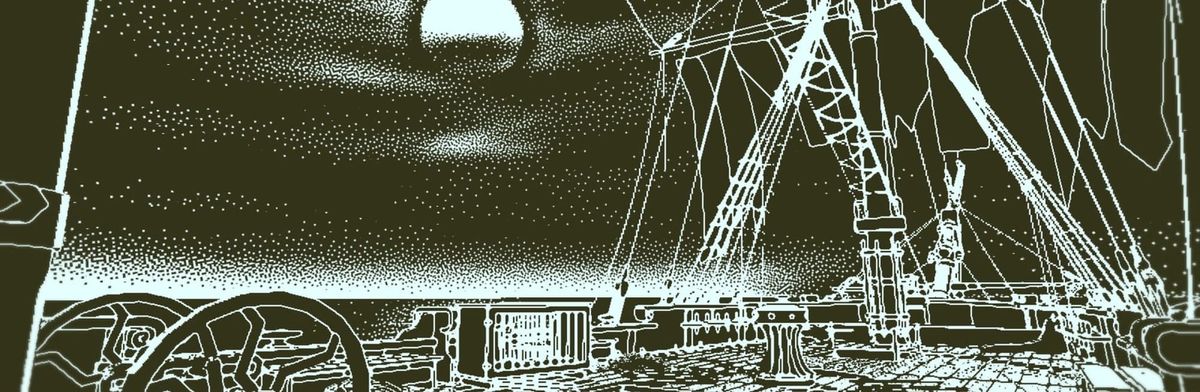
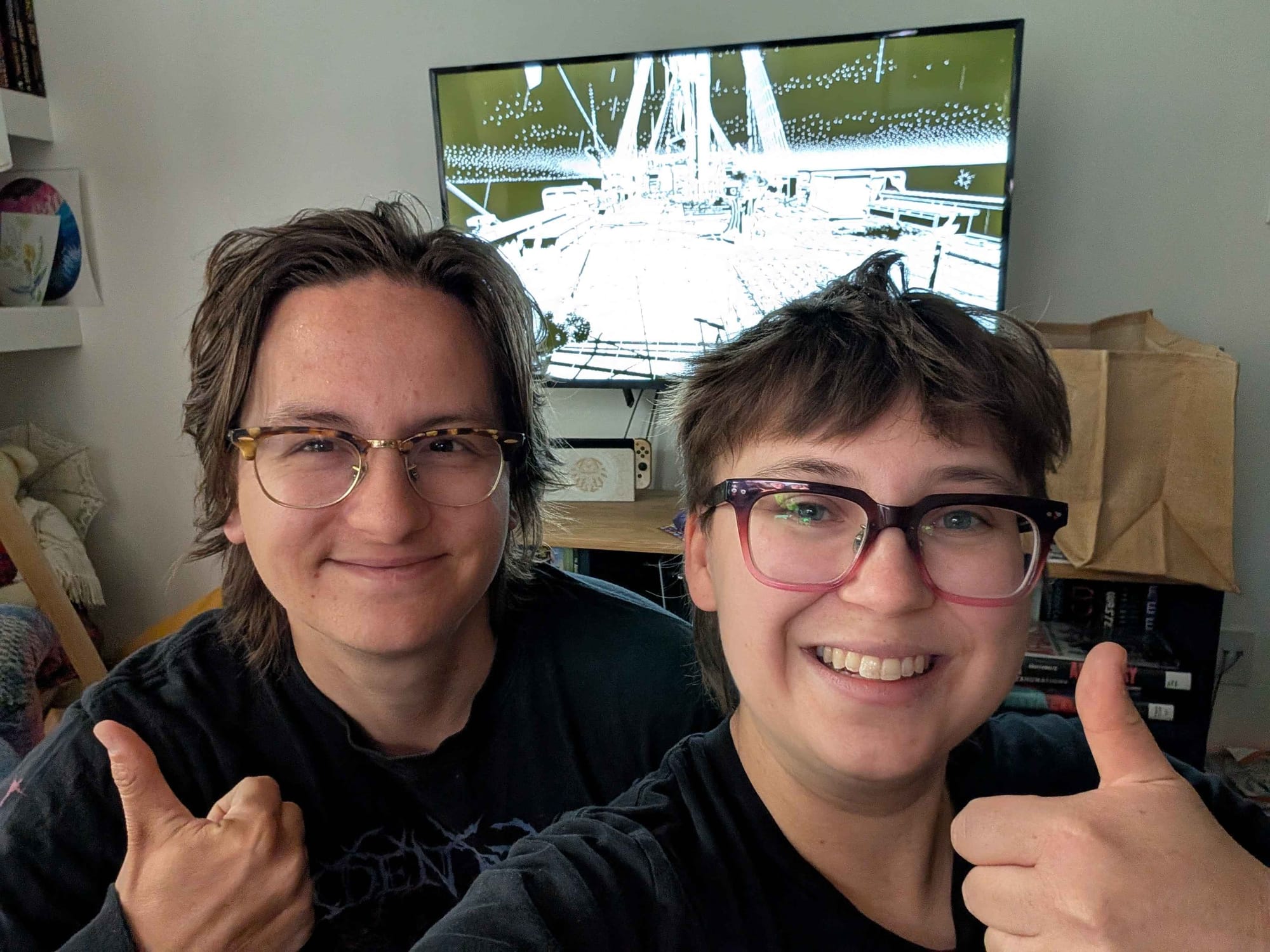
Created by solo developer Lucas Pope back in 2018, Return of the Obra Dinn is a classic indie darling. When it comes to genre, it is considered a puzzle-adventure game, but the alluring narrative is the real hook that ensnared Taylor and I. Essentially, the Obra Dinn arrives on the English coast in 1807 after being reported missing for years. Not a single living soul is on the vessel and as an investigator for the East India Company, your goal is to to find out what happened to the Obra Dinn and the fates of the 60 people onboard. To do so, you will use a pocketwatch that recreates moments of death and an in-game journal to catalogue your findings. Both of these gameplay mechanics were well-executed and allowed us to rewind back to prior deaths and catalogue with ease (though controls were awkward at times). As for the narrative itself, it was a interesting nautical tale to delve through, but the conclusion was more straightforward than we anticipated it would be (though maybe our imagination built up too many novel alternatives). Beyond the narrative, the game's visual style is unique and is reminiscent of an lovingly antiquated monochromatic 1-bit art style. Further still, the OST is incredible and really adds to the game's atmosphere. My personal favourite track is "Soldiers of the Sea." In the end of the game, which took around ten hours for us, we really came to appreciate the charming Obra Dinn and its crew.
"You bastards may take... ...exactly what I give you."
- REDACTED in Return of the Obra Dinn
Tales from the Ant World by Edward O. Wilson (Book)
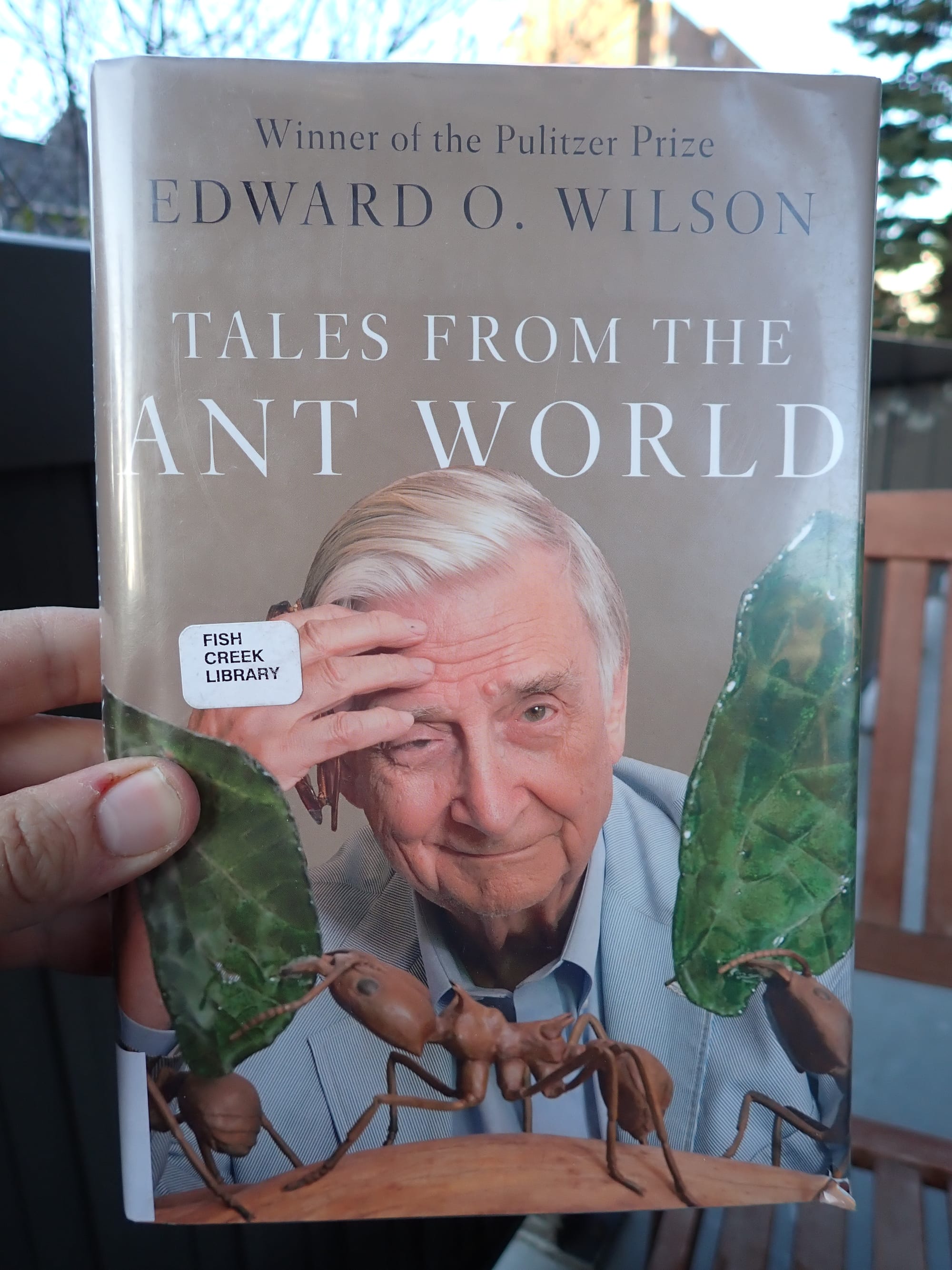
Today, Edward O. Wilson is famed for popularizing the biophilia hypothesis and codeveloping the theory of island biogeography, but his early academic focus was myrmecology: the study of ants. In his recent book, Wilson chronicles his early naturalist inclinations and how ants captivated his passion. In a scattered series of essays and memoir entries, he discusses the vast diversity of ants and their quirks. I found myself learning something new with every entry, from discussions on expert desert navigators like Cataglyphis fortis, caving-dwellers like Aphaenogaster gamagumayaa, swift runners like Ocymrmex nitidulus, ranchers like Melissotarsus beccarii, and armoured raiders like Megaponera analis! A personal favourite was the Basiceros-genus group (which includes a few different species). This genus of ant lives in Neotropical rainforests and moves incredibly slowly. Though this might seem like a weakness, it is an evolutionary adaption. These ants have specialized hairs that collect dirt, dust, and all sorts of debris. Their slow pace and specialized hairs result in a camouflage that protects it from inattentive predators (or myrmecologists for that matter). By the time I turned the last page I had gained a newfound respect for the diversity of ants on our planet.
"Similarities exist, but the real differences between ants and men are profound. Ants create civilizations by instinct - because they are capable of doing nothing other than what they evolved to create. For their part, human beings are torn by the competing needs of self, family, and tribe. We use culture to banish instinct or at least tame it, even while using it to create our values."
- Edward O. Wilson in Tales from the Ant World
The ADHD Field Guide for Adults by Cate Osborn and Erik Gude (Book)
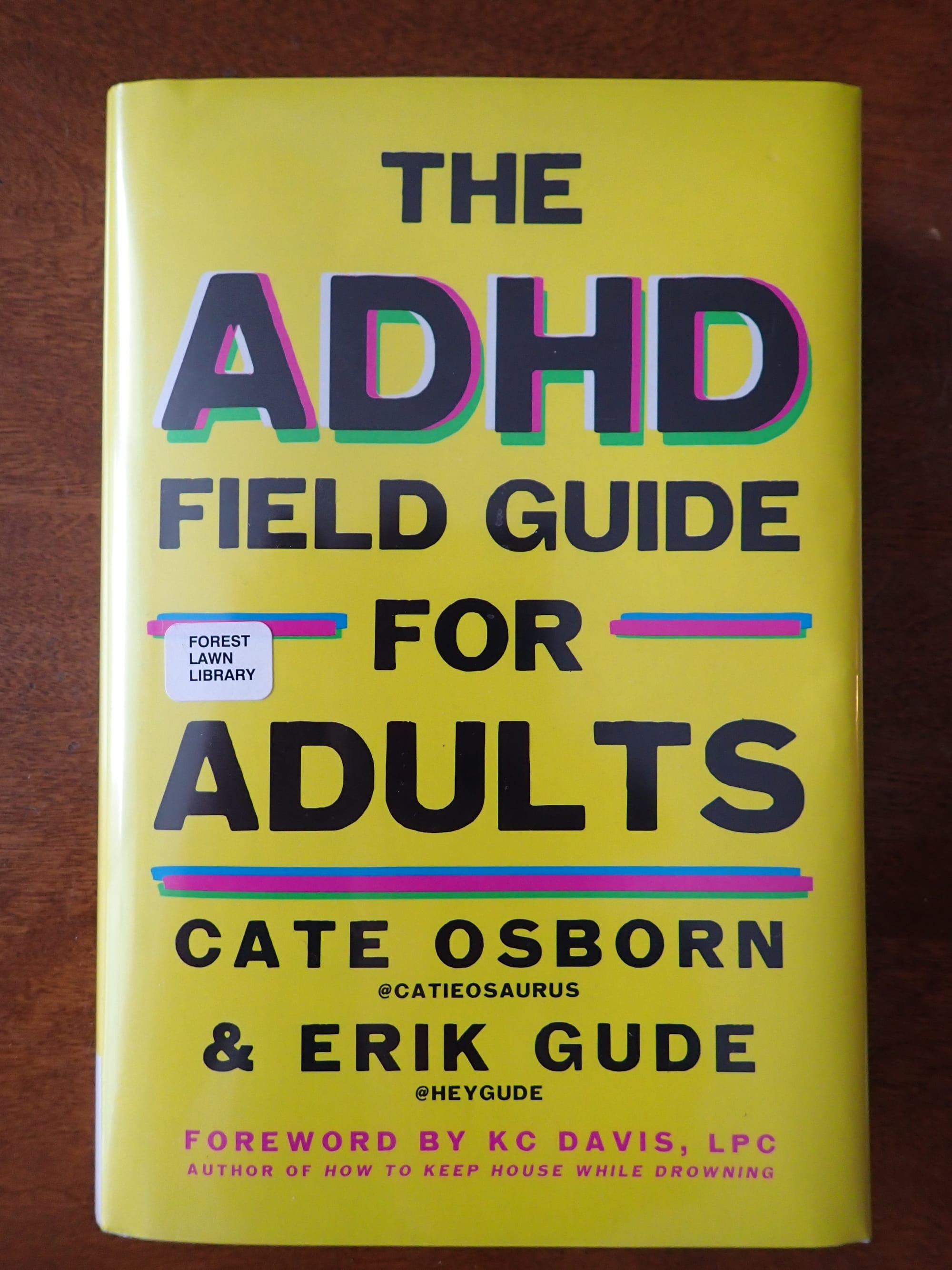
At its core, Cate Osborn and Erik Gude's recent The ADHD Field Guide for Adults is psychoeducational/self-help book that focuses on the adult experience of attention-deficit/hyperactivity disorder. Additionally, it is written by non-experts who use social media to discuss ADHD – reflecting itself in the text through an informal conversational tone. In this regard, it is quite similar to Jessica McCabe's How to ADHD: An Insider's Guide to Working with Your Brain and that informs my evaluation of the book heavily. Compared to McCabe's guide, this book is largely organized through commonly-asked questions and has very little structure comparatively (which might be intentional). I found that books' sections pertaining to ADHD psychoeducation lacked the novelty I would expect from a newly released title. Exceptions to this exist, however, with discussions regarding the intersection between ADHD and topics like menstruation, birth control, and menopause - all providing more depth than the previous books I have read on this topic. Given the recent surge in women and trans/non-binary folks being diagnosed with ADHD, a demographic that has largely been underrepresented in diagnoses and treatments, this is a welcome enhancement. After a brief interlude into diagnosis and clinical treatment, the guide moved towards discussing time management, organizational systems, financial management, and relationships. The advice contained in these sections were fairly well-trodden – but all good reminders. I was particularly interested in this Kandan board idea though. Ultimately, if you have read something like this before, this book is skippable.
"If you take nothing else away from this book, remember that you are worthy of love and care, just as you are."
- Cate Osborn and Erik Gude in The ADHD Field Guide for Adults
Screen People: How We Entertained Ourselves into a State of Emergency by Megan Garber (Book)
The central argument made in Megan Garber's Screen People: How We Entertained Ourselves into a State of Emergency is obvious. The widespread proliferation of screens as a technology has resulted in the emergence of a performative, polarized, and inattentive society that is rapidly and disastrously blurring the lines between information and entertainment. Beginning with internet sensation of 2015, The Dress (which might sound like a rather odd introductory piece), Garber navigates the post-truth crisis by bearing witness to the cultural trajectory of how we came to this moment. To do so, she uses numerous sociologists, historians, and post-modern philosophers alike to aid her through this unchartered territory. From Walter Lippman to Marshall McLuhan, I was treated to a deep dive into many academic concepts along the way – all simplified for a general non-fiction readership. Whilst the subject matter was immensely intellectually stimulating to my specific interest in digital technologies and their role in society, I did find a rather odd issue: the parts were greater than the sum. Each of these would have made fantastic essays – if they were independent of each other. But read together as a whole, I found myself struggling to string the book's broader thesis together as I read. I think that this could have been resolved with better editing. Compared to this book and on a similar topic, I prefer Nicholas Carr's Superbloom: How Technologies of Connection Tear Us Apart.
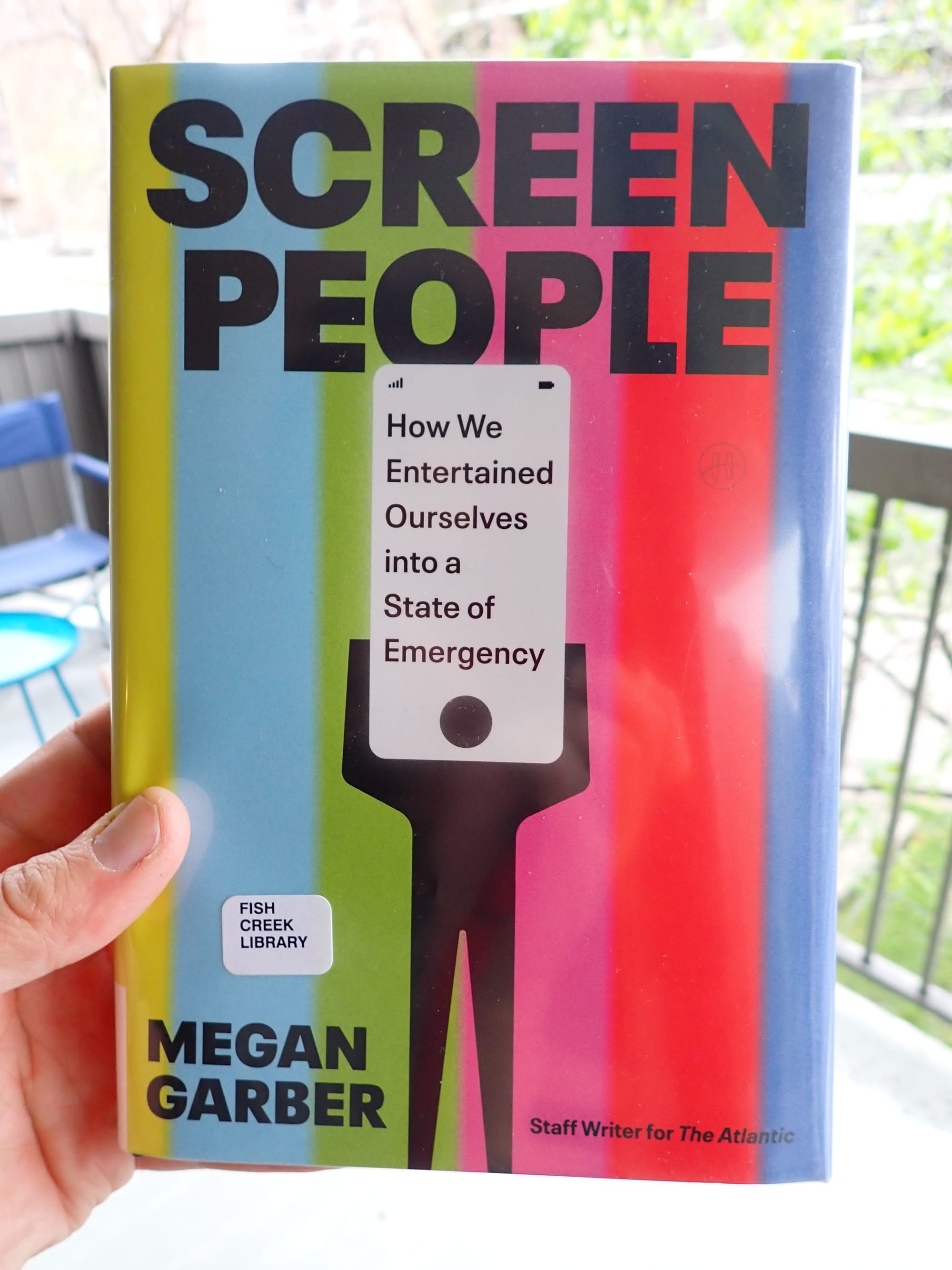
"The festivals' claim was catharsis; their broader effect, though, was stasis. Their outrages cleansed, the peasants went on their their lives, their low status intact. Screens host daily versions of that ritual. Bringing as they do the possibility that our images and words might be broadcast to millions of people, can give the illusion of political agency. What they offer instead, all too often, is a faint facsimile of power. They turn political agency into an aesthetic: something we might appreciate, from a polite distance; something we might feel rather than do. Audiences are empowered only to watch and to react. They can clap; they can heckle; they can leave. The structures of social media - the narraow economies of reaction they offer to their users - mimic in large part those limitations: clap, like, log off. Under the guise of empower, the platforms often assume passivilty and encourage it. They entie. They lull. They can turn citizens into passive audiences."
- Megan Garber in Screen People: How We Entertained Ourselves into a State of Emergercy
How to Keep House While Drowning by K.C. Davis (Book)
What a sneaky little book! The initial draw might be the self-help tinged promise of cleanliness, but each page carries a message of self-compassion and functional spaces. Of course, there are certainly practical elements of the book regarding launder, showering, dishes, and organizing space is concerned. A particular favourite that I learned about from K.C. Davis is the Five Things Tidying Method - which is incredible for bringing functionality to home organization through manageable steps. Additional tips turn towards carrying out the most basic of tasks by prioritizing what matters appropriately through something akin to an Eisenhower Matrix or habit stacking care tasks with more enjoyable activities. But as stated, the central idea of this book is not optimization or productivity, but reminding one's self that a home should work for you, rather than you working for your home. The space should serve you!
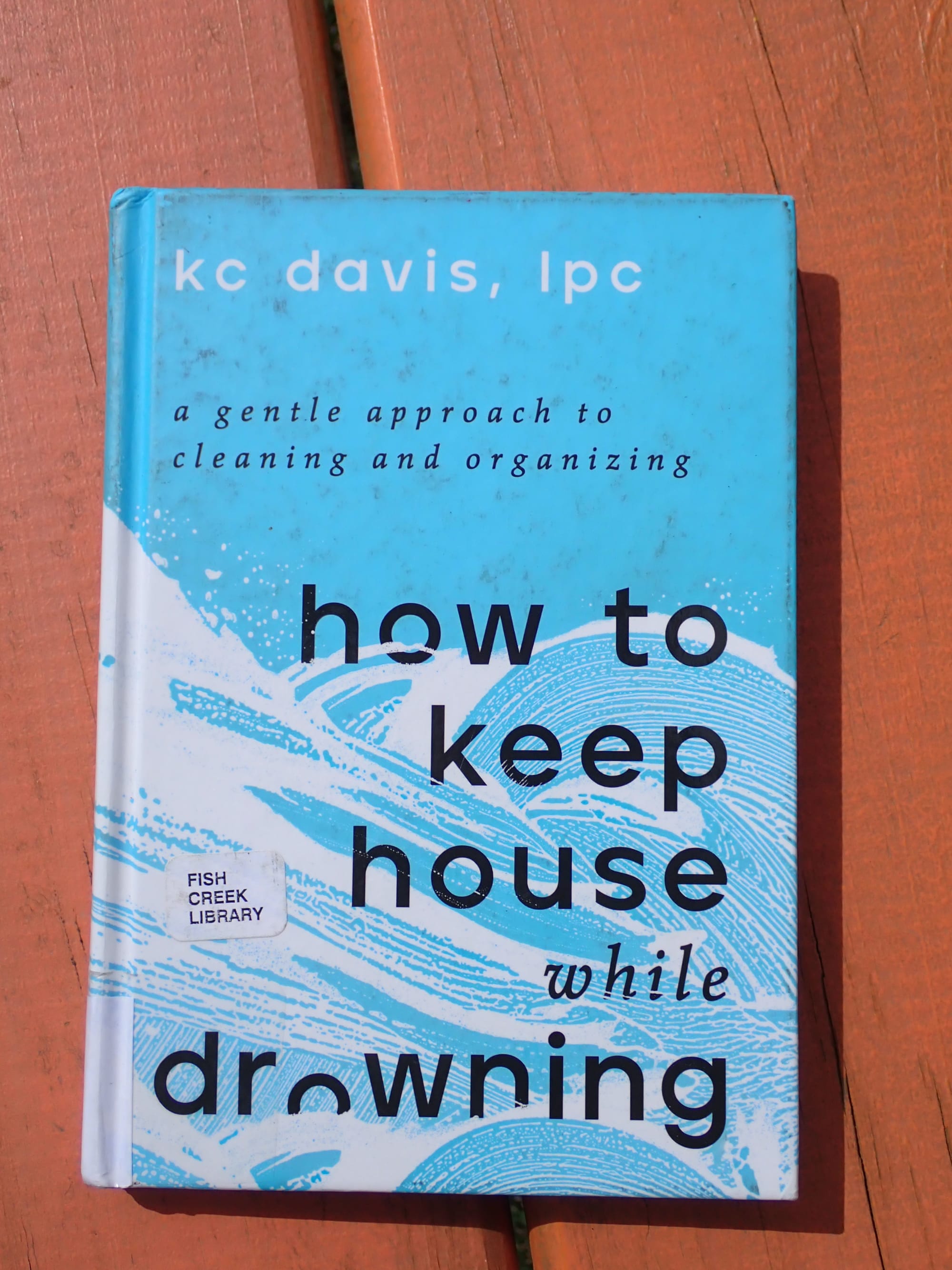
"You do not have to earn the right to rest, connect, or recreate. Unlearn the idea that care tasks must be totally complete before you can sit down. Care tasks are a never-ending list, and if you wait until everything is done to rest, you will never rest."
- K.C. Davis in How to Keep House While Drowning
Links, Longreads, and Video Essays
- Kurzgesagt discusses the looming demographic collapse in Germany (and the broader West) and its broader impacts on the welfare state.
- Michael MacKelvie shares how humans evolved to embrace the simple, yet unique, act of throwing.
- During the last week of The Late Show with Stephen Colbert, his team and him go through their worst cut moments over their eleven years in an extended (and wholesome) episode.