Instant Coffee: Cooling Down from Thessaloniki to Macau

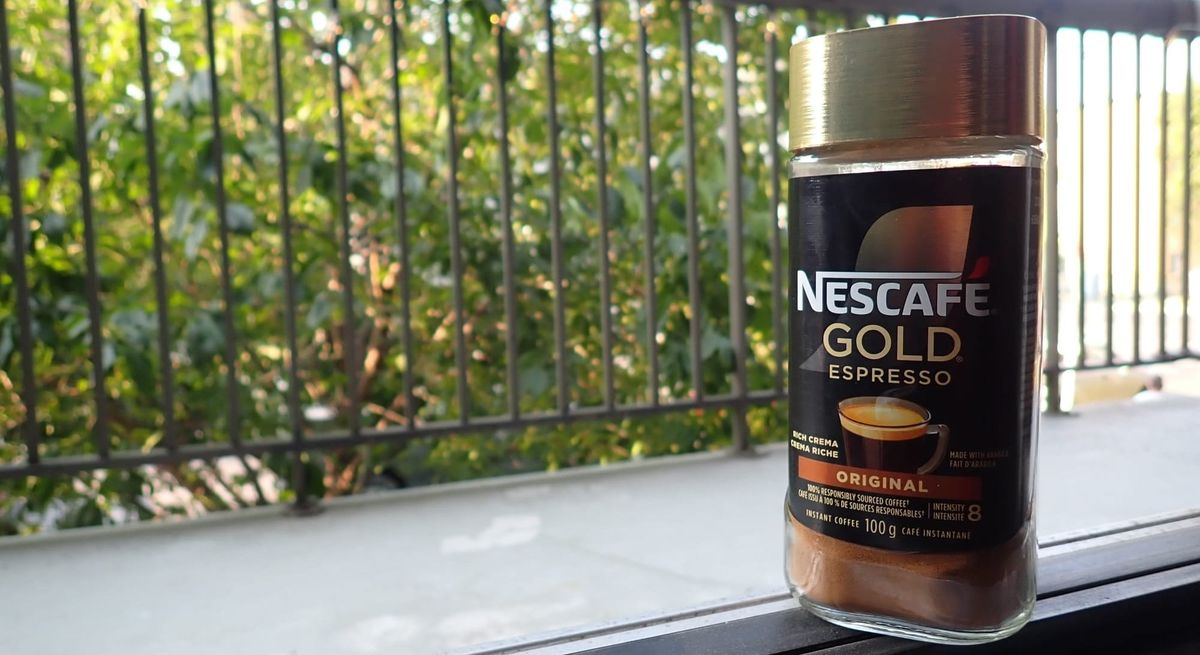
I have a love/hate relationship with instant coffee. In one regard, in terms of pricing, quick preparation time, and store-availability; this is the most accessible way of enjoying coffee. But as a bit of a gatekeeper with a big mouth and a strong opinion, I must put forward the idea that the enjoyment of instant coffee is questionable at best. It exists as a market option that maximizes convenience over all else. And so, instant coffee is the logical conclusion to our hyper globalized world. The origins of instant coffee affirm this too. Though there is some disagreement, instant coffee's patent is traced back to Invercargill, New Zealand (one of the southernmost cities on the planet) in 1890 – a period known for intensifying global trade and colonial resource extraction. Of course, you will likely know instant coffee from the market dominance of Nescafé brand over the product. Its owner, Nestlé, is clinically evil and devoid of any semblance of moral character. Their stranglehold on this market merely represents one small example of their grand parasitic nature.
Oops. This is not a pamphlet on the perils of global capitalism, it is a blog entry regarding instant coffee.
The production of instant coffee is a marvel in its own right. It begins with the green coffee beans being roasted like most coffee beans. In industrial percolators, the roasted coffee is brewed in mass volumes and gets more concentrated as time goes by. In order to prepare for retail sale, the brewed coffee goes through either freeze-drying or spraying drying (each has their own benefits and drawbacks). This ensures that granules of coffee are dried of their moisture (thus shelf-stable) and ready for rehydration by consumers. Due to this process, instant coffee is rightfully associated with mass production (nearly half the world's green coffee beans are used for instant coffee), but even independent coffee roasters can deliver their own variants of these products. Though I have not tried those fancier instant coffees, I am sure they have their own appeal to consumers.
With all this exposition being said and given the warm temperatures lately, I would like to present two cold beverages reliant on instant coffee as its main ingredient. Unlike my dear espresso tonic, these recipes are just okay. They lean on the sweeter side, which is not necessarily my preference, but both recipes are very accessible for most kitchens and they have their place.
In Regards to Dalgona Coffee
Remember the early days of the COVID-19 pandemic and its accompanying 2020 economic crisis? Yeah, it was surreal and traumatic, but also, dalgona coffee was trending and that was a bit of a nice distraction. The beverage has its roots in Macau in 1997. Allegedly, a tourist couple ordered it and a disabled shipwright working at his cafe obliged. Over the years, the beverage, known at the time "hand-beaten coffee" gained regional notoriety. It became a global sensation in 2020 when a South Korean actor ordered and shared the beverage, likening it to dalgona, which is a Korean honeycomb toffee. After that point, folks trapped at home with rudimentary staple ingredients and an excess of time started preparing it and sharing the results online.

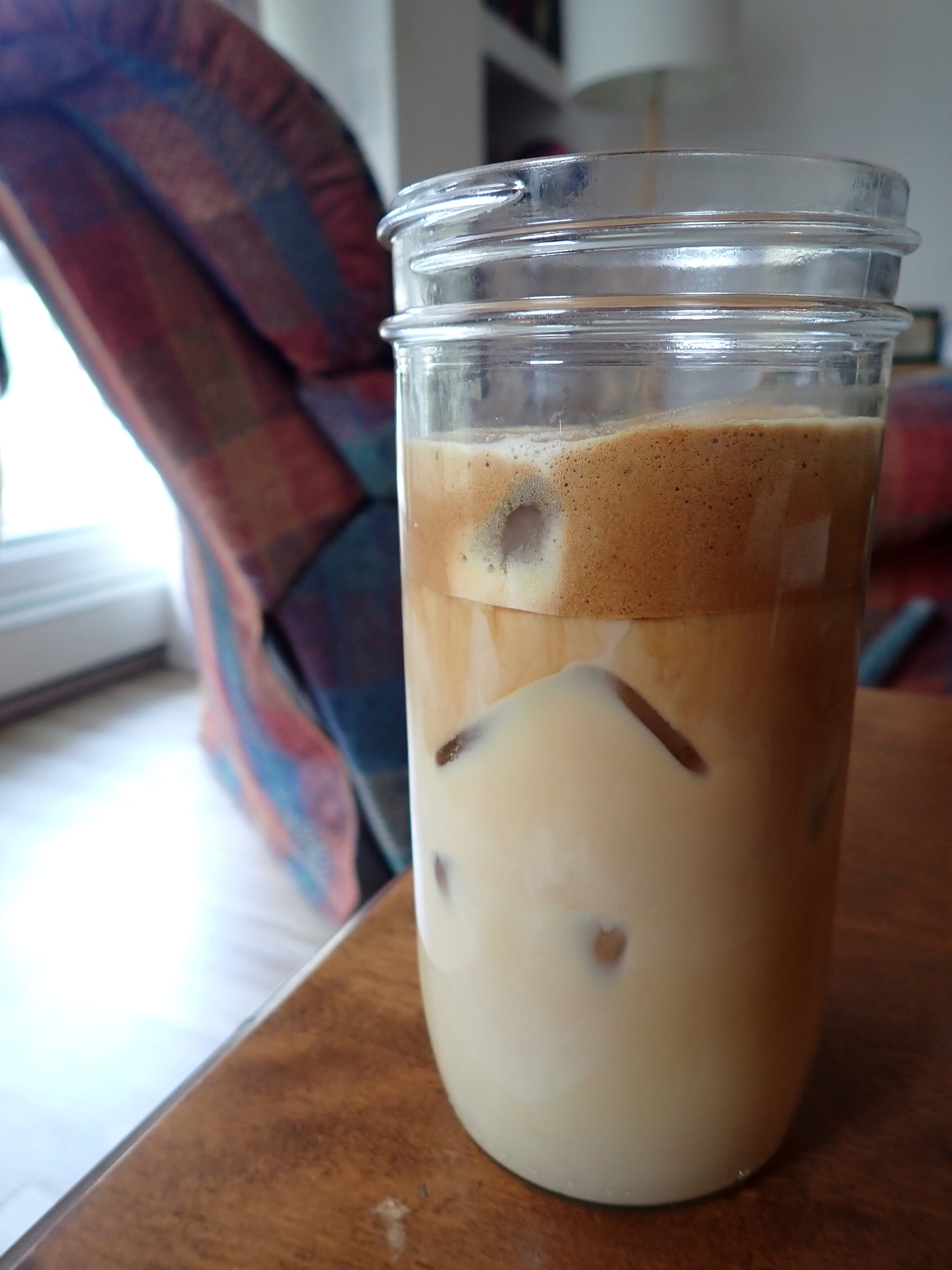
Making dalgona coffee is cheap and easy. Whisk equal parts: warm water, instant coffee, and graduated sugar into a bowl for 2-3 minutes. Layer the dense foam on top of an iced glass of milk (your preference). Enjoy!
In Regards to the Greek Frappe
When I lived back in my hometown, my parents were strict adherents to the tenets of instant coffee. Whilst they had a conventional coffee brewer, they would most often use instant coffee for their morning kick of caffeine. When I was a teenager, I worked as a barista and understood that instant coffee's unquestionable convenience came at the cost of taste. Still, I would have use the family's instant coffee and a cold beverage I would make would be reminiscent of the Greek frappe. The Starbucks' frappuccino that many of us are familiar with is a variant of this Greek frappe in many regards: a sweetened and iced coffee-based beverage. Starbucks does their own flavourful (and ultra-sweetened) versions of this beverage. Some do not have coffee added to them and some are named after mythical creatures. For today, I just want to talk about the Greek frappe.
As the disputed story goes; a Greek Nescafe representative, Dimitris Vakondios, invented the Greek frappe in Thessaloniki back in 1957. The gist is that he used a scattering of ingredients available to him during the Thessaloniki International Fair and invented the drink - though many have brought the validity of the story into question. In any case, Nescafe opportunistically picked up on the beverage and marketed the hell out of it. Over the decades, it become intimately tied to Greek coffee culture.
And Nescafe ran with the frappe!
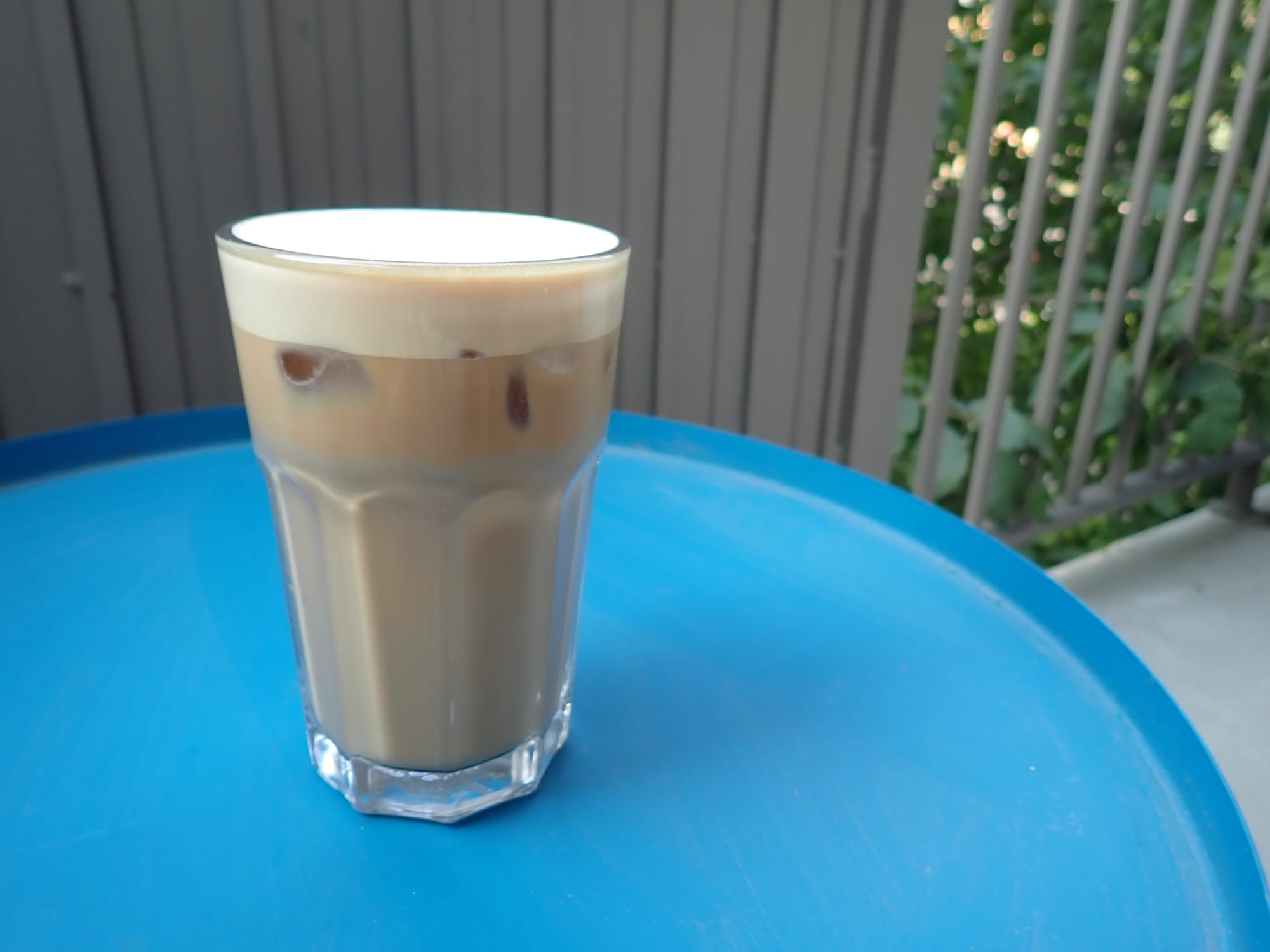
As for the drink, it is similarly easy to make, like the hand-beaten coffee. You are going to combine 1 tbsp of instant coffee and 1 tbsp of sugar into a mason jar/blender/cocktail shaker. Add half a cup of hot water. Mix vigorously with an attention to your safety (hot water is hot). Add a cup of ice and a cup of milk (your choice). Mix vigorously with an attention to your safety (cold ice and milk is cold). Serve in a glass and enjoy! All of these proportions are adjustable and this can be confirmed by the fact that every online recipe has their own version with different ratios/specific milks/mixing mechanisms.
Feel it out for yourself. Life is too short to be dogmatic.
Or maybe just make an espresso tonic instead.