Loot, Shoot, and Exfil: Precarious Joy with Bungie's Marathon

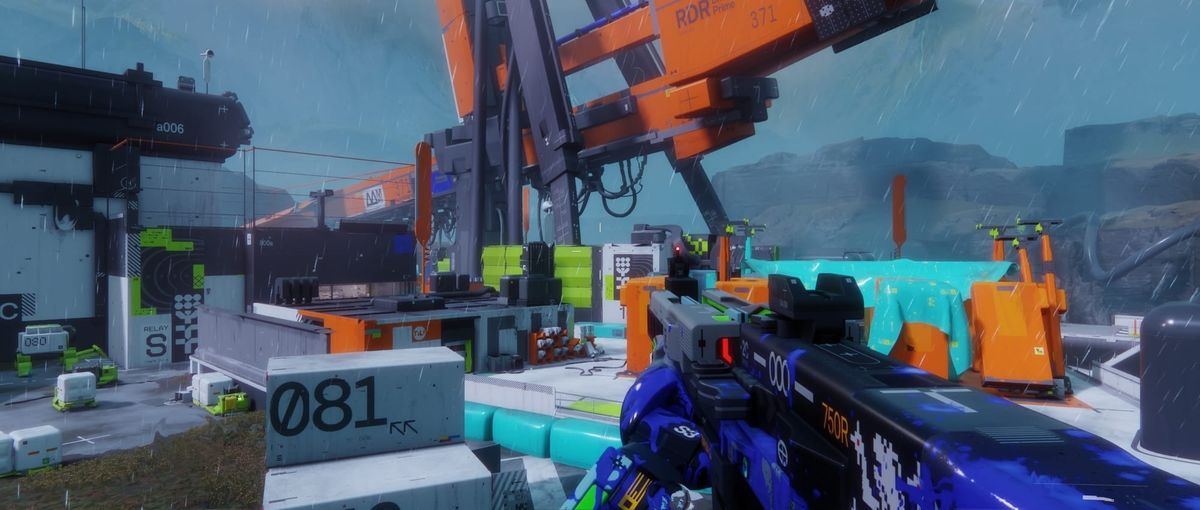
Developed by Bungie (the studio behind the original Halo trilogy, Destiny and Destiny 2), Marathon is an extraction shooter that has utterly captivated my attention over the last several months. Since its release in March, I have played over 140+ hours on Tau Ceti IV, and if I am being honest, I am still pretty mid. In any case, I wanted to share my thoughts regarding Marathon and my relationship with the game, but also explore the precarity of the game as a live-service.
The Rise of the Extraction Shooters, Precarity of Live Service Video Games, and Marathon in Context
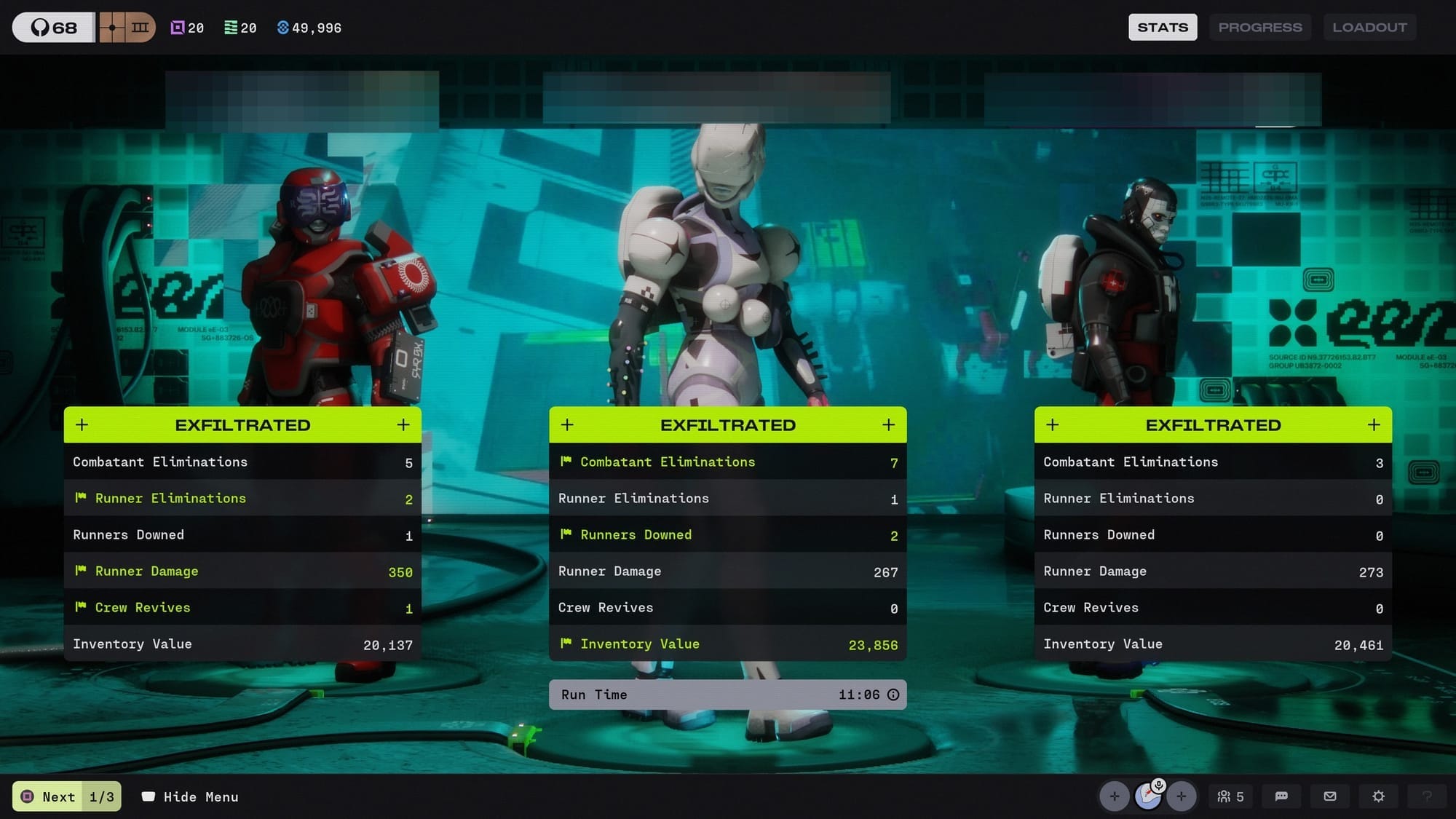
The genre of extraction shooters has been around for awhile and attracts a certain niche of players. Escape from Tarkov, Hunt: Showdown, and more recently, Arc Raiders all reside within this genre, with Marathon acting as a late entry into the increasingly over-saturated market. While they all have their own unique flavour, gameplay mechanics, and player culture; they share some similarities. Let's make this simplified. Either as solos or with a team, players enter a open world map with gear. They will loot the map for valuable weapons, armor, equipment, salvage, or any other lootable resource. They may run into enemy AI or other potentially hostile (or helpful) human players. They make tactical decisions regarding how they approach encounters, ranging from fighting, hiding, or fleeing for safety. Classic survival decision-making. If they extract alive, they bring everything back into their vault. If they are defeated during the run, they lose everything they brought into the run and anything they looted. Essentially, this is all an extraction shooter is.
Extraction shooters, based on the current model for most entries in the genre, are live services. Partially, this means that the video game itself is treated as just that: a service for continuous play. In order to maintain operations of online servers, bug fixes and balancing updates, and new content drops to retain and expand the player base, a live service game relies on initial sales, but also monetization through a combination of cosmetics, microtransactions, paid expansions, or subscriptions. If you look at GTA Online, profits from post-sale monetization can be exceptionally lucrative with leaks revealing that over six month period, they made a whopping $1.3 million per day! If you are in the industry and looking at these numbers, I can understand why the live service model is appealing. But these profits also obscure a larger issue with the live service model, which is its precarity. Continued profits are dependent on the player count and their willingness to engage with post-sale monetization options. If you look at Firewalk Studios' hero-shooter Concord (an example of Sony Interactive Entertainment's recent push into the live service model), we can see how unreliable this all is. Within two weeks of launch, Concord was shut down. For a corporate titan like Sony, this might not seem like a big deal (corporate leadership will still get their high salaries and likely bonuses after all). For the creative talent behind this work, however, decisions like these must be absolutely heartbreaking for their spirits (with likely layoffs adding salt in their wounds). For industry bottom feeders - the click-farming Youtubers and some hype mongering video game journalists - spinning up further industry angst and anxiety itself becomes another hustle. This precarity also creates a weird circumstance for players who increasingly forgo immediate immersion, to instead appraise the likely failure or success of every new project.
Given the over-saturation of entries into the extraction shooter genre and the demands of a live service model, it was an odd (though brave) decision for Bungie to pursue this niche player-base. This decision, however, is even more bewildering when considering their recent $3.6 billion acquisition by Sony Interactive Entertainment. In order to deliver, Marathon needed an absolute blockbuster. Otherwise, like with many live-service games, it risked being shut down due to low profitability, with comparisons being drawn to colossal failures of Concord and Highguard. And so, after the early reveals of gameplay, a closed alpha test, and the Server Slam, Marathon launched in March 2026 with a paradoxical combination of overblown hype and foreboding despair. Not exactly low stakes. And with launch, sales and player count did not meet expectations. Bungie faced a bleak future with Destiny 2 development being effectively folded into Marathon and employees experiencing mass company-wide layoffs. Despite attempts to lure new players with a free week trial, the situation did not improve with Season 2: Nightfall. It was clear to many, fans and haters alike, that Marathon was not a safe bet and the future looked uncertain. What else is new?
Shoot, Loot, and Extract: Marathon's World Design, Maps, and Gameplay
But still, I am enamored with Marathon and I cannot help but root for its survival. The world itself is so unique and it is worth discussing. The background lore behind the circumstances that Tau Ceti IV finds itself in are, put bluntly, depressing. The United Earth Space Council (UESC) receives a distress call from a newfound colony on Tau Ceti IV. In response, they venture to the beleaguered colony and find that it has totally collapsed with little knowledge as to the cause for the its breakdown. As the UESC attempts to secure the colony's remains, opportunistic factions and megacorporations seek to salvage, fight UESC forces, and gain information from the fallen colony and the orbiting UESC Marathon. They hire runners (basically mercenaries) who give up their bodies in exchange for specialized biocybernetic "shells", which you choose from to play as. Hmm, I think I was just mentioning other bottom feeders a few paragraphs ago.
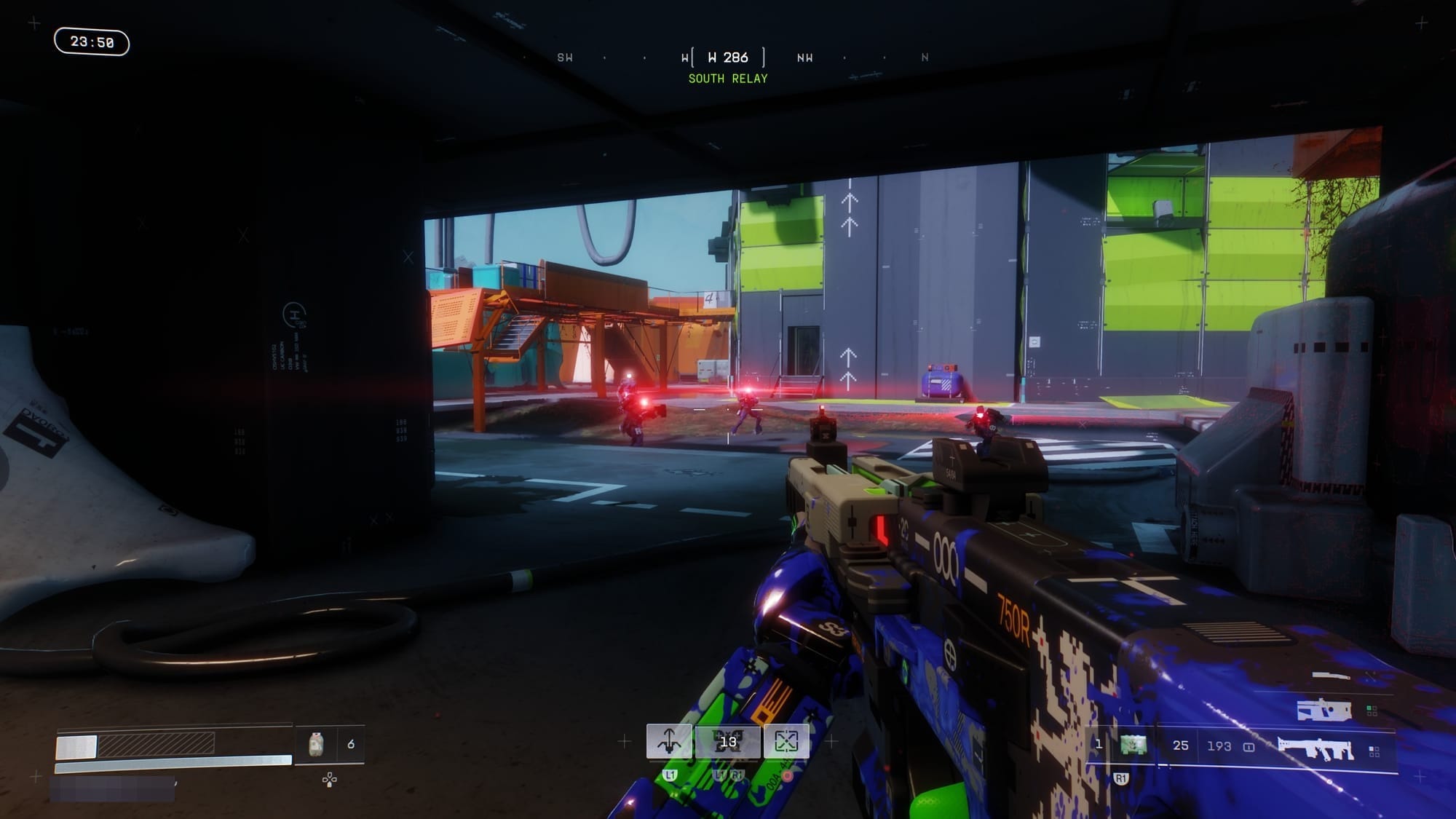
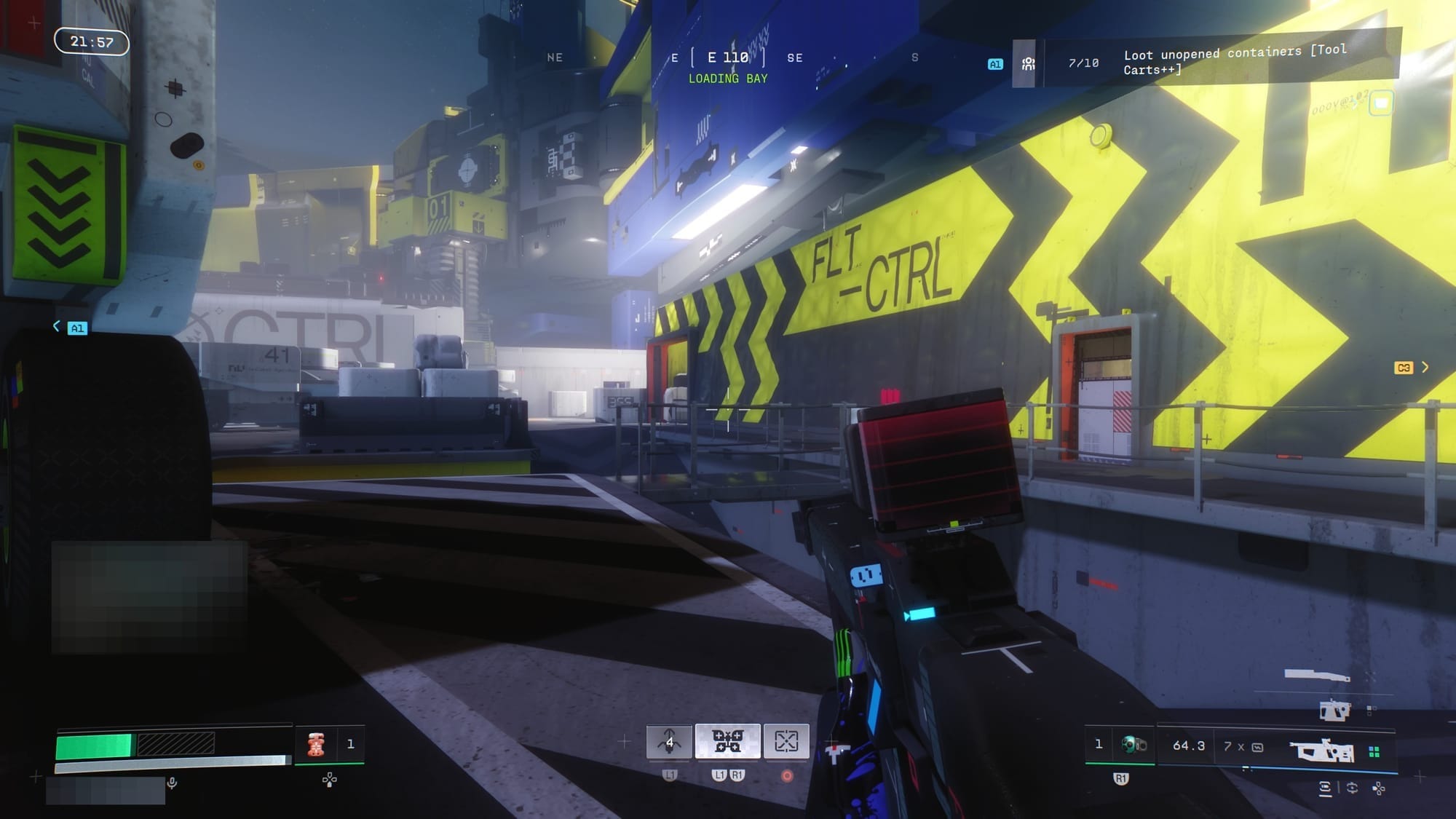
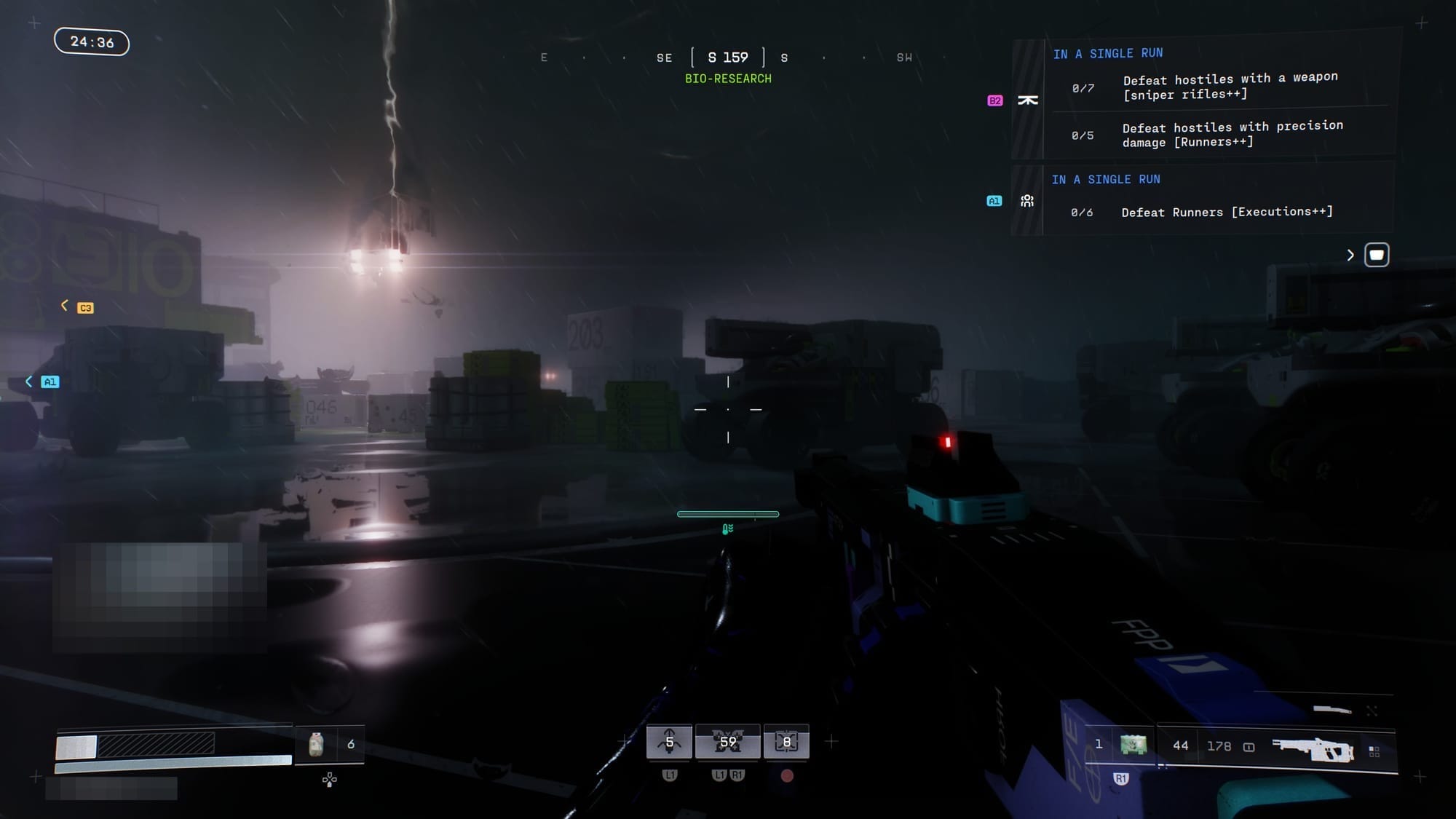
There are currently four maps that, in addition to beautifully eerie cinematics and text briefings, provide the expression for this world design: Perimeter, Dire Marsh (including its Night variant), Outpost, and Cryo Archive. They all have their own points of interest relevant to the world itself, from bioagricultural facilities, relay towers, or open-air hangars. This helps create a sense of desolate atmosphere, but also reminds the player that for all the technological splendor of this world, progress halted. As players level into being able to access these maps, they amplify the difficulty through tougher enemy AI, more complex navigation, and varied environmental considerations (though the loot is more valuable). For introductory maps like Perimeter and Dire Marsh, they are much more open and spaced out, which allows more free flow movement and better sightlines. Alternatively, Outpost and Cyro Archive are very claustrophobic and require an immense amount of map knowledge to appropriately meet objectives and compete with other players. As someone who has been playing the first-person shooters for awhile, I can confidently say that on a personal level, Outpost is one of the greatest maps ever designed.
As for the gameplay, Marathon has a lot going for it. You pick from eight varied runner shells. Each act as a class with their own combat and support mechanics, and all have a visual identity that is recognizable to other players. Triage is the quintessential healer class that provides passive shield and health regeneration to other players through autonomous drones, and can also revive other players from a distance. Assassin can equip an invisibility cloak to sneak around, as well as throw down a smoke screen that disrupts enemy optics. For myself, I main Recon and Thief. The former can periodically scan its proximity for hostile players and AI (knowledge is power), but can also send out an autonomous drone to seek out hostiles and explode – naturally. The Thief has a grappling hook, a scanner to locate valuable nearby loot, and a pickpocket drone to steal from other players. Beyond the basic abilities and stats associated with each runner shell, players can bring weapons (and their mods), equipment, consumables, cores, and shields from their vault into a run, thus creating ample variety for each match. While some extraction shooters might entertain safe pockets to secure some loot upon defeat, this game makes no concessions to casual play. This lack of casual play creates a higher skill floor than most multiplayer FPS games, but this is achievable with good practice, the right gear, and most importantly, communicative and tactical teammates that use their mic.
Like Arc Raiders, I find that the enemy AI in this game to be exceptional, which is due to their ability to appropriately respond to player encounters with real tactical decision-making. Unlike AI in other games, enemies in Marathon will retreat, move into cover, and use reinforcements to bolster their numbers. With variance among the UESC units themselves in strength and weapon use, the AI prove to be formidable foes. And that, of course goes for the human players as well. Like your own team, other players have their own objectives, which can range from meeting contract requirements, farming salvage, or taking on larger map events for glorious loot. They also have different calculations regarding risk and reward, so they might choose to opportunistically push another team during combat with the enemy AI, or they might use it as distraction to flee to the exfil site with what they have already. I have heard heated arguments between my teammates regarding this balance between risk and reward in different circumstances, specifically because these calculations create enough complexity and the margin for error is limited. Marathon is better for this reason.
Finding Joy In Spite of Precarity
Whether it be video game journalists, Discord channels, or Reddit, there is a lot of anticipatory anxiety regarding the knowledge of Marathon's precarity. The enjoyment, as raucous as it can be, is punctuated by weird moments of concern for player counts, corporate finances, and of course, the wellbeing of Bungie's development team. The fact that a game that received critical acclaim and very positive Steam reviews faces any prospect of prematurely ending development and further mass layoffs is absurd, but this is the video game industry right now. It is a behemoth that has made a few excessively wealthy and was built on the passions of the creative talent of the many. And it is chilling to me, as someone who grew up playing video games and enjoying the fruits of this labour, that the creative workers of these companies are continuously treated like shit. They are overworked, underpaided, extracted for their brilliance, and just like Marathon's player count, they are living in unreasonably precarious times. As corporate leadership continues to use generative AI to weaken labour power, the squeeze on these workers will only intensify. As consumers, we need to recognize that video games, though an enjoyable escape as they might be, are influenced by the decisions of these corporate elites. The development of video games are inherently political, because creative work is inherently political. Just as I continue to find joy with Marathon despite its precarity, my hope is the creative workers, whether they are recently laid off, working with an indie studio, or continuing to work for these large entertainment conglomerates, will hold the faith. Though we increasingly find ourselves living in an age of AI sludge and expanding oppression of the creative working class, human imagination is worth defending and celebrating.