Shattered Lands, Marathon, and Influencer Kids: April 2026 - Monthly Roundup

Whereas Weeknotes provide a brief summary of the weeks' affairs and a selection of relevant photos, Monthly Roundups act as a retrospective on video games, albums, books, movies, essays, and television programs that defined my month. Accompanied below are my thoughts on them, including how I engaged with them, but also what I consider praiseworthy and subject to fair critique.
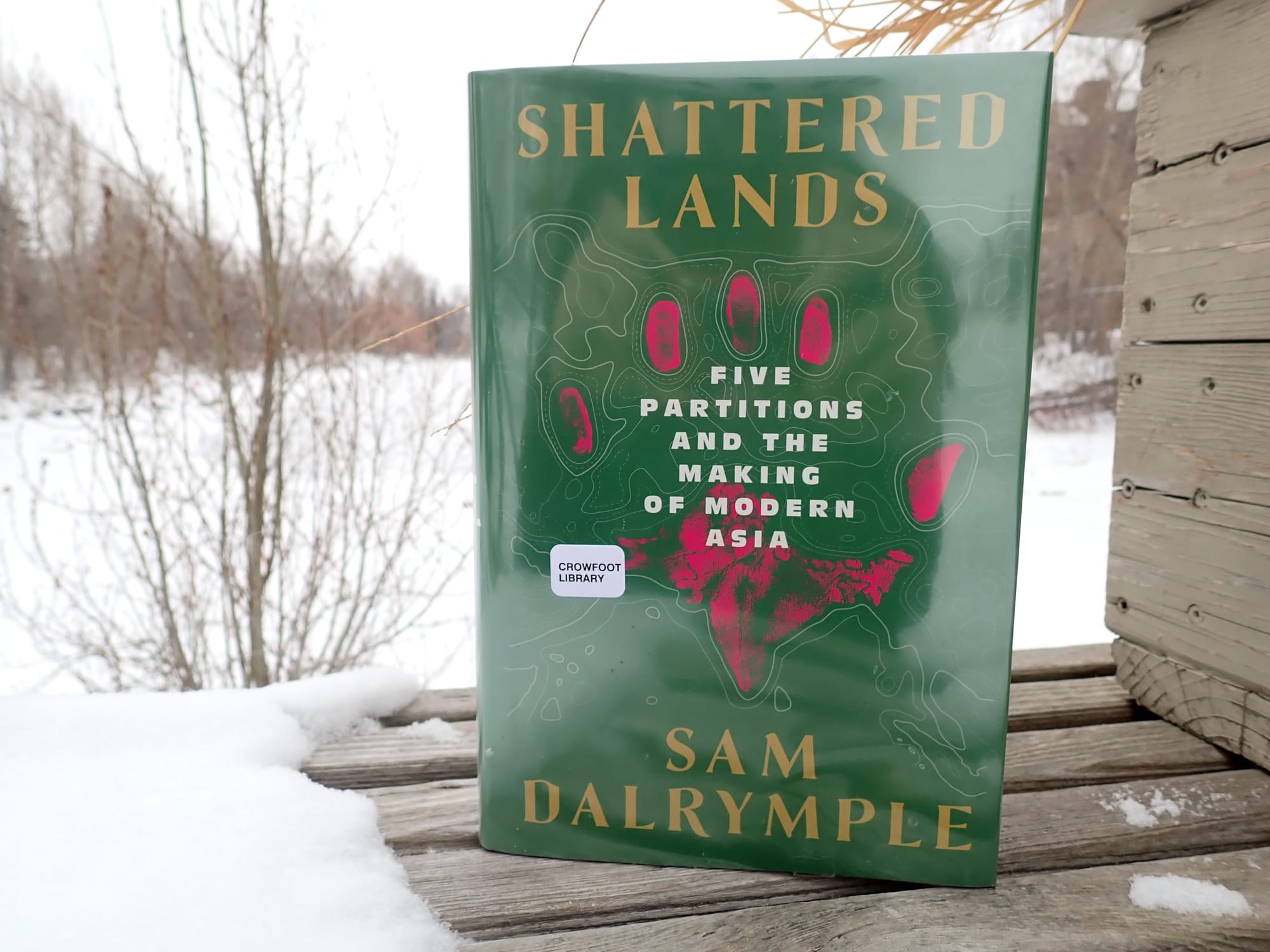
Shattered Lands: Five Partitions and the Making of Modern Asia by Sam Dalrymple (Book)
Beginning with the Simon Commission in 1928 and ending with the Bangladesh War of Independence in 1971, Sam Dalrymple's debut book chronicles the partition of the Indian Empire through five major partitions. This Indian Empire, though commonly referred to as the British Raj, stretched from Aden to Rangoon along the Indian Ocean, and though it often associated with India, Pakistan, and Bangladesh, it was much larger and more complex than its political characterizations would have you believe. In fact, today, there are twelve nation-states that were forged through these partitions. In this regard, the book is chronological and provides excellent context regarding the rationale for each partition, the process of enacting these grand state transformations, and the legacy left behind – which is often bloodied and chaotic. This allows a range of key historical moments to be explored throughout the book, like the Quit India movement, the origins of Kashmir conflict, the annexation of Hyderabad, the Yemeni Civil War, and the accession of the Princely States to name a few. Adding to this, Dalrymple introduces the reader to a rich ensemble of iconic British and South Asian leaders with great profiles of their political perspectives and respective roles during partition, including Jawaharlal Nehru, Mohammad Ali Jinnah, Mahatma Gandhi, Sheikh Mujibur Rahman, Aung San, and Lord Mountbatten.
Of course, during the partition of the Indian Empire, tragedy reigned. And whilst the book is excellent in the statistical accounting for atrocities of partition: displacement, starvation, interstate warfare, and communal violence, Dalrymple contends with the "vulgarity of numbers" by leaning on the stories of survivors and witnesses alike. This is a noble and challenging attempt to highlight the individual humans behind the numbers, but it can only rightfully do so much and is not a criticism, but an inherent difficulty for historians to overcome. Often times, I scout for criticisms whilst I am reading a book, but with this book, I struggle. This is, without a doubt, a magisterial history book that I will be thinking about for years.
"Today the divides across South Asia grow ever wider. Politicians still stoke the embers for their own ends with the now nuclear-armed nations of India and Pakistan continuing to teeter on the brink of all-out war. In Burma the military maintains its assault on the Rohingya minority and at the time of writing the Indian government was planning to fence the Indo-Bermese border, one of the last unfenses borders in the region. The last decade has witnesses the decline of globalisation, the strengthening of borders, and the resurgence of nationalism across the world. India's Partitions are a dire warning for what such a future might hold."
- Sam Dalrymple in Shattered Lands: Five Paritions and the Making of Modern Asia
The Death of Stalin (Movie)
Armando Iannucci's The Death of Stalin is an excellent political comedy that follows Soviet leadership in the aftermath of Josef Stalin's demise and their chaotic attempts to jostle for succession in the power vacuum left behind. The three main characters central to this power struggle are Nikita Khrushchev (played by Steve Buscemi), Georgy Malenkov (played by Jeffrey Tambor), and Lavrenti Beria (played by Simon Russell Beale). All of them, along with the rest of the cast, exemplify the paranoia and nonsense of the Stalin years with such incredible wit and candor throughout the entire film. Ultimately, I really enjoyed this story of palatial intrigue and all of its dark comedy!
"I've always been loyal to Stalin, always. This arrests were authorized by Stalin but Stalin was also loyal to the collective leadership and that is true loyalty. However, he also had an iron will, undeviating, strong, could we not do the same and stick to what we believed in? No. It is stronger still to forge our own beliefs within the beliefs of the collective leadership, which I have now... done."
- Vyacheslav Molotov in The Death of Stalin
Astro Bot (Game)
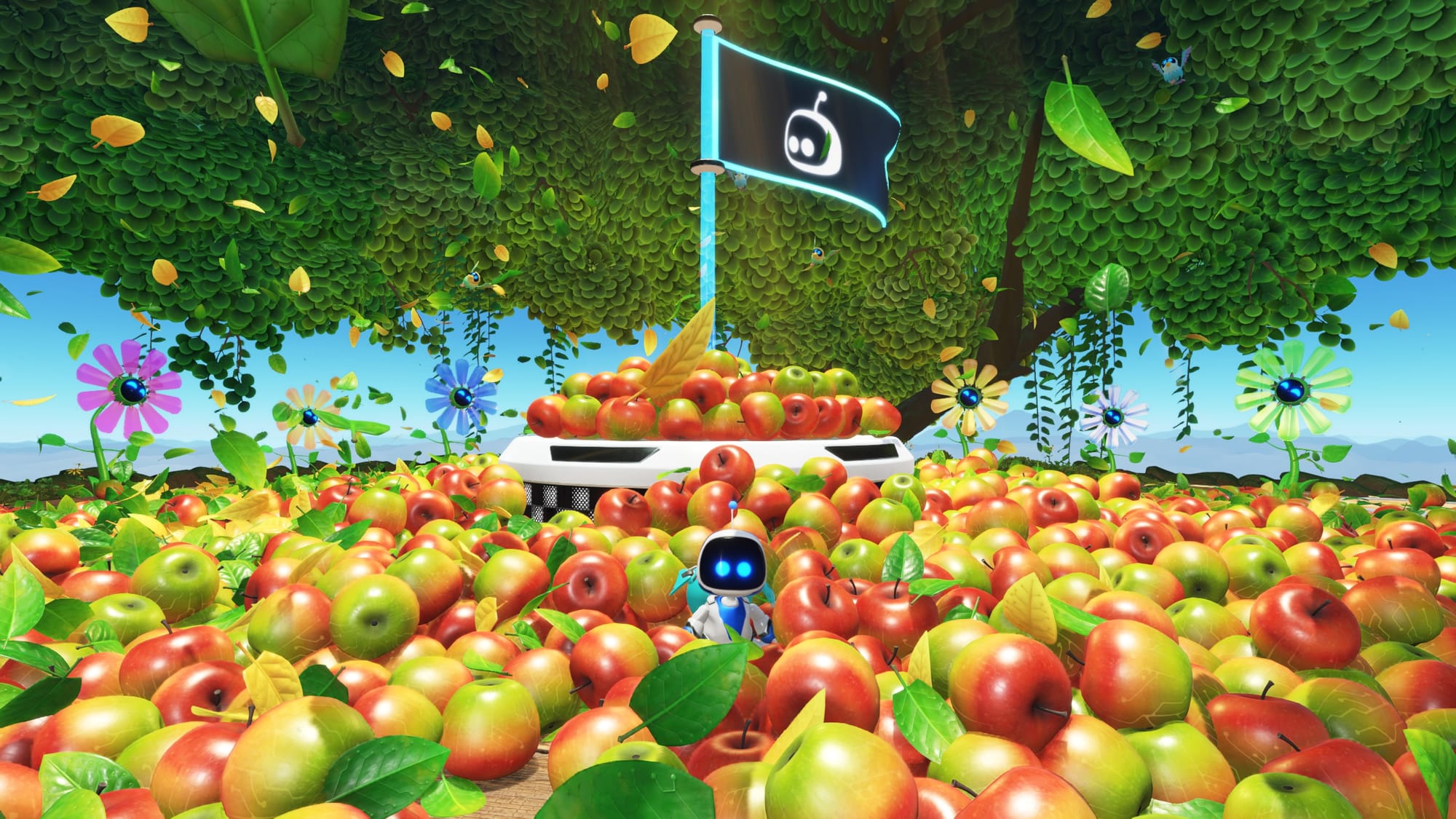
Astro Bot is to Sony's PlayStation as Mario is to Nintendo. At its core, Team Asobi's latest installment, 2024's Astro Bot is a phenomenal and cutesy platformer that celebrates fun over all else! It builds this fun by providing the player with an astonishing amount of virtual playgrounds to explore and so many tools to play with. A personal favourite level was going through a Japanese bathhouse and turning my character into a sponge that could absorb and release water. For Taylor, a personal favourite was the one pictured below, spent running around the inside of a great smiling tree. But these are just a couple examples. Regardless, there is a sense of whimsy and wonder that is inescapable and will likely provide joy to even the most jaded of adults. Further still, it also elevates the PS5 controllers' adaptive triggers and haptic feedback capabilities. The controls themselves are simple and accessible to anyone, regardless of age. And that might sound odd, but given the tendency of the video game industry to follow the money and cater to teenage boys and young men (a primary demographic group of video game consumers that is shifting), this should not be taken for granted. The primacy of fun is the key to this universal appeal.
"You know, when I think of the team, it is the amount of generosity they gave. They put the user first always, you know, never thought about any, you know, any calculation, it was just about the kids especially, because we had this huge huge privilege to be potentially the first game to be in the hands of children and we know what it means very much."
- Nicolas Doucet (Game Director at Team Asobi) upon receiving the 2024 Game of the Year Award.
Black Wave: Saudi Arabia, Iran, and the Forty-Year Rivalry That Unraveled Culture, Religion, and Collective Memory in the Middle East by Kim Ghattas (Book)
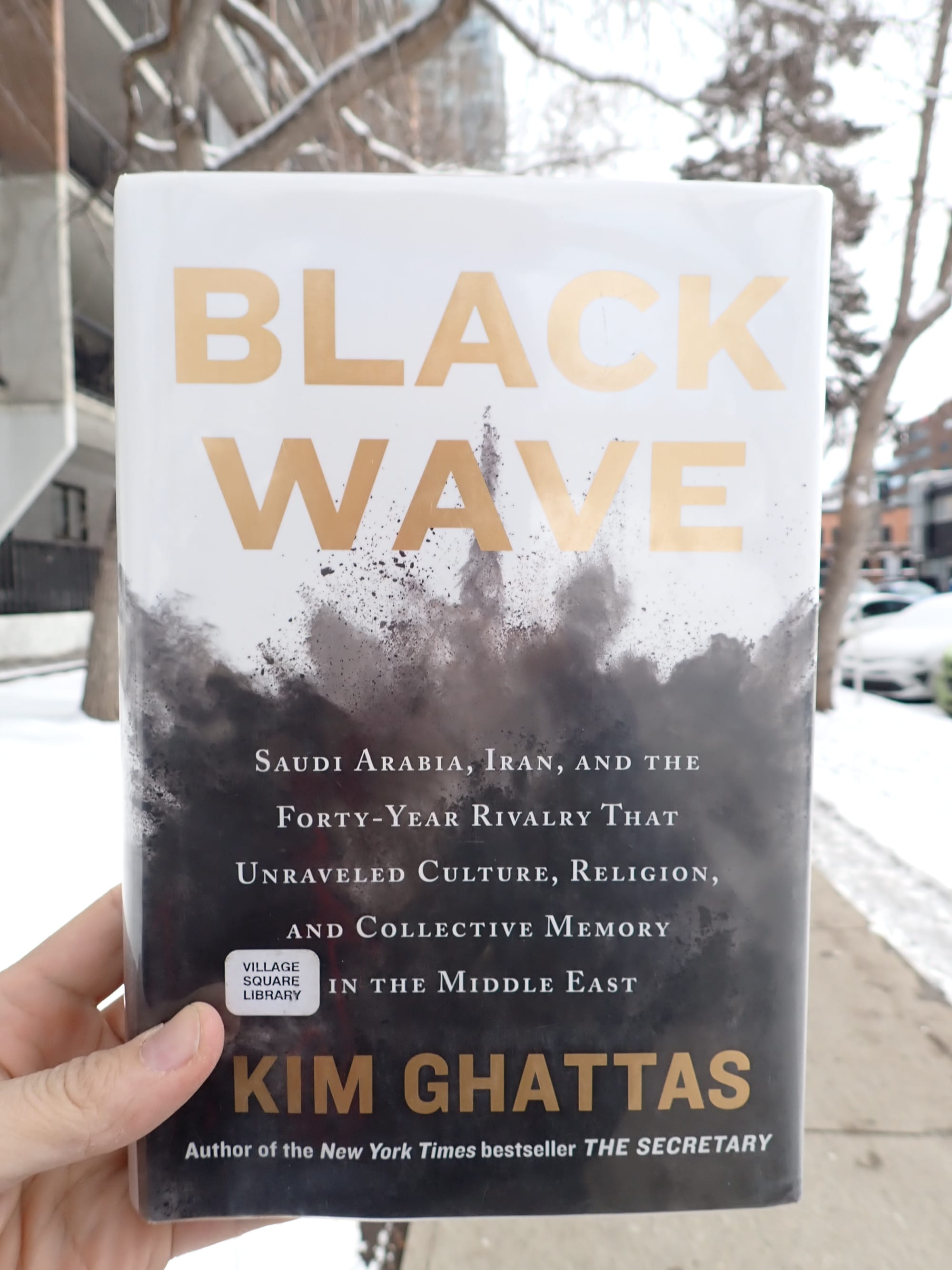
This book is an exploration into the decades-long conflict between Iran and Saudi Arabia – a heated rivalry if you will. Ghattas begins with Iran's 1979 Islamic Revolution as the history's pivot. At the pivotal year of 1979, the tumultuous Middle East I grew up watching on television and reading about online begins to take shape. Her focus is oriented around how the rivalry between Iran and Saudi Arabia resulted in broad surge of ultraconservative Islamic fundamentalism and the emergence of widespread Sunni-Shia sectarian violence – both of which should be understood as relatively modern political phenomena in Middle Eastern history. This history is complex and is quite resistant to the easy simplifications the Western press relies on. The primary strength of this book is, thankfully, the enticing and revealing narrative storytelling that makes this history more manageable to understand. Ghattas ensures that the reader is provided with the sufficient context to make sense of broader trends and pivotal moments, summarizations of key individuals/groups (and the intellectual origins of their perspectives on Islamic political thought), and successfully weaves a sweeping transregional history in the process. Another major feat that Ghattas has managed is unapologetic decentering of the West. Whilst European or American perspectives certainly emerge in this book, it is a genuine rarity. Still, Ghattas makes it clear that she does not "intend to absolve America for the many mistakes it has made and the deadly policies it has often pursued." Rather it is to recognize that "Saudi Arabia and Iran have agency; they make decisions based on their interests and drive the dynamics, too."
"The winds of extremism blowing in Pakistan for three decades had carried almost everyone further to the right. The center had moved, and everyone reorganized around a new understanding of the norms. The competition for who was a good Muslim was slowly engulfing more and more people, leading to excesses of self-righteousness and the creation of more radical groups and their even more violent spinoffs. With minorities like Shias and Ahmadis already considered beyond the pale of Islam, the next step in the competition for purity was Sunni versus Sunni."
- Kim Ghattas in Black Wave: Saudi Arabia, Iran, and the Forty-Year Rivalry That Unraveled Culture, Religion, and Collective Memory in the Middle East
Malcolm in the Middle: Life Is Still Unfair (Mini-Series)
I grew up watching Malcolm in the Middle in the 2000s. It was such a fantastic show that centered a working poor, dysfunctional family with a constant barrage of chaos. In this regard, I seen my family and I in the Wilkersons. And though I do view remakes and reboots with a strong degree of cynicism, I concede that I was very excited for this four-part mini series when it was first promoted online. And after watching it, I can confirm that it is fan service – unapologetically. But for all the leaning on nostalgia that this mini-series does, it honours the legacy of the original television show and its fantastically loveable cast. It doesn't skip a beat and finds its place quickly, without the awkwardness so often present in nostalgia bait (looking at you: That 90s Show). The plot was well-structured, self-contained, and provided each character with time to shine, but also, it thankfully does not overstay its' welcome. Honestly, it was just a great time!
"This is the most incontestable forfeit of a security deposit of all time."
- Hal Wilkerson in Malcolm in the Middle: Life's Still Unfair
Like, Follow, Subscribe: Influencer Kids and the Cost of a Childhood Online by Fortesa Latifi (Book)
With incredible nuance and genuine empathy, Californian journalist Fortesa Latifi delves into the intersection of childhood and online spaces to better understand mommy blogs, TikTik teen moms, and family vlogging. In these online spaces, digital media has been used to share family life with the broader public – resulting in the odd 21st century phenomena of sharenting. Of course, family life has been expressed through glossy magazines and reality television before, but the barrier to entry and the utter lack of regulations on this domestic cottage industry brings to light some important, and of course, controversial questions. These questions pertain to digital privacy, child labour, parasocial fandoms (along with snark communities), the overrepresentation of Mormon families in family vlogs, the developmental impact of sharenting on the children themselves, and the paradoxical glorification of motherhood in a society that denigrates and abandons struggling mothers. In exploring these issues, she uncovers the creators, sponsors, and audiences that allow these families to turn their everyday lives, however curated, into digital productions worth millions and raking in lucrative brand deals that can make any working class parents envious – even for a moment. And that is the allure, especially for the mothers who often do thankless labour that is often invisible and lonely – specifically because it "occurs privately, within the home. It is not glamourous and it is not paid. It is expected, taken for granted. Invisible. The promise of the mom influencers and family vlogger is a dream: You will be paid for the labour of motherhood, and you will be paid well." Yet, the aspirational content being shared is simply the "performance of labour" and serves the economic system itself through bolstering the endless hustle for more consumer goods to create a life that was sold to you through a shady sponsored content post. And again, as is always the case, complexity creates more complexity.
Of course, going into this book, my attitudes on family vlogging were hostile. I considered my own trivial blog and how I might share my experiences as a father one day. Those questions sound easy on the surface. Yet Latifi is not interested in easy, she is interested in finding common ground. In this regard, she shares her own challenges with motherhood and the allures of mom influencers. She finds empathy for chronically-online compulsively-sharing parents. And in hearing from them, though I still feel quite disgusted with the practice and believe stringent regulations should be implemented, I do share that empathy too. Ultimately, as the author argues, that the "conversation about this grey area works best with a nuanced approach, rather than through a set of binary choices (e.i. either you don't post your kids online and you're a monster bent on exploitations, or you don't and you're a saint forgoing social media fame for the greater good of your child.) For Latifi, despite that nuance, comes down to this position: " The money is eye-watering; the fame is intoxicating; the possibility for economic freedom is dizzying. I know all of that. And still, I would never – ever, not for a second – make the trade."
I couldn't agree more.
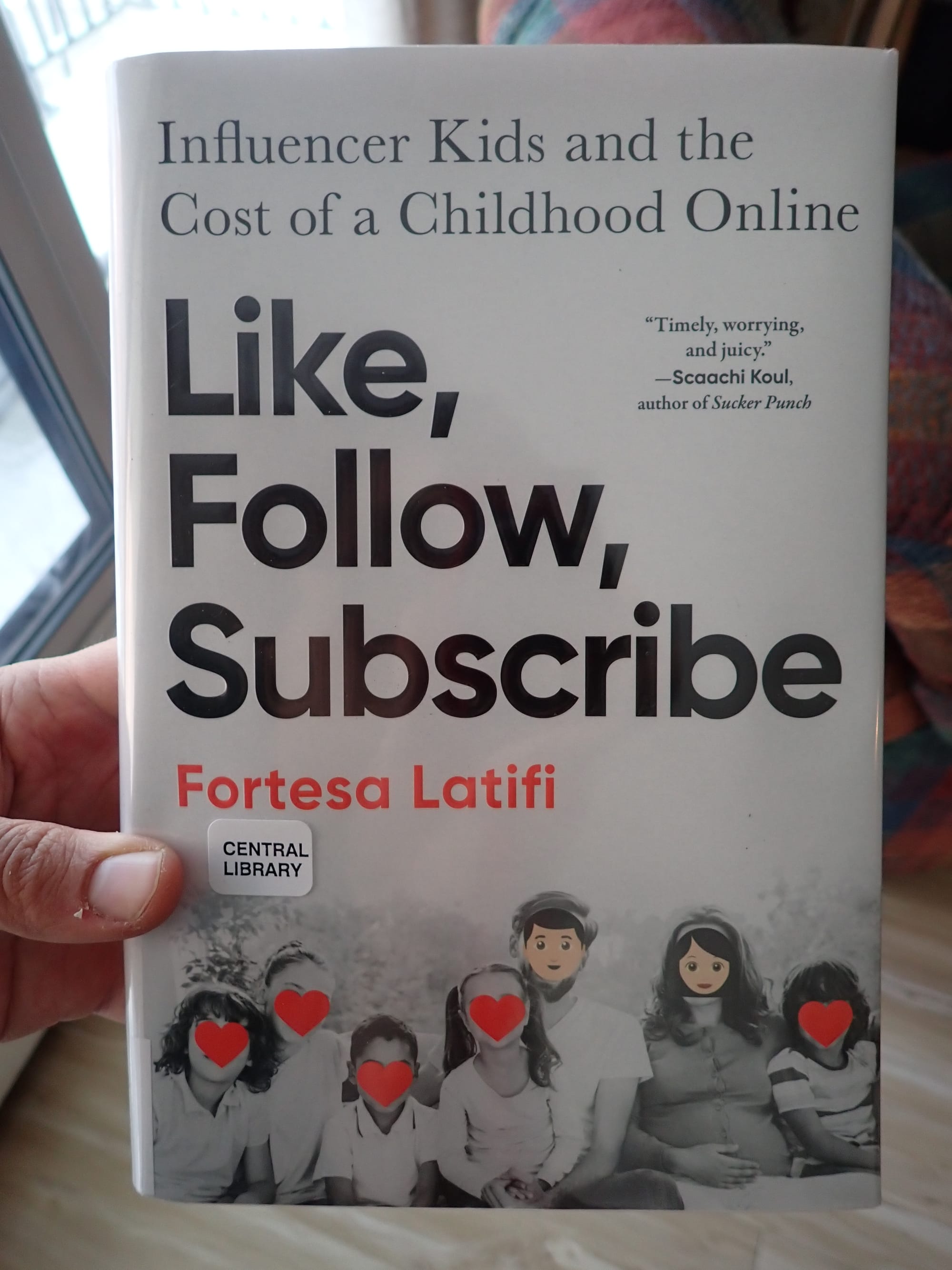
"In a country where economic stability feels so precarious and increasingly unreachable for all but the wealthiest among us, is it any wonder Americans are taking their turn playing the viral lottery? In late-stage capitalism, where everything is a commodity, including you and your child, there's a part of me that understands trading privacy for economic stability.
In an ideal world, childhood would be sacred, existing outside of the bounds of being turned into profit. But we're not in that world - we're in this one, where there are fewer and fewer paths to the ever-shrinking middle class, where childcare costs often outpace a parent's entire salary, where student and medical debt continues to balloon - and where one sponsorship can net more than the average yearly salary. I wonder if, when people rage against influencer parents, what they're really raging against is the system that offers so few opportunities for advancement besides the commodification of the self. All you have to do is post."
- Fortesa Latifi in Like, Follow, Subscribe: Influencer Kids and the Cost of a Childhood Online
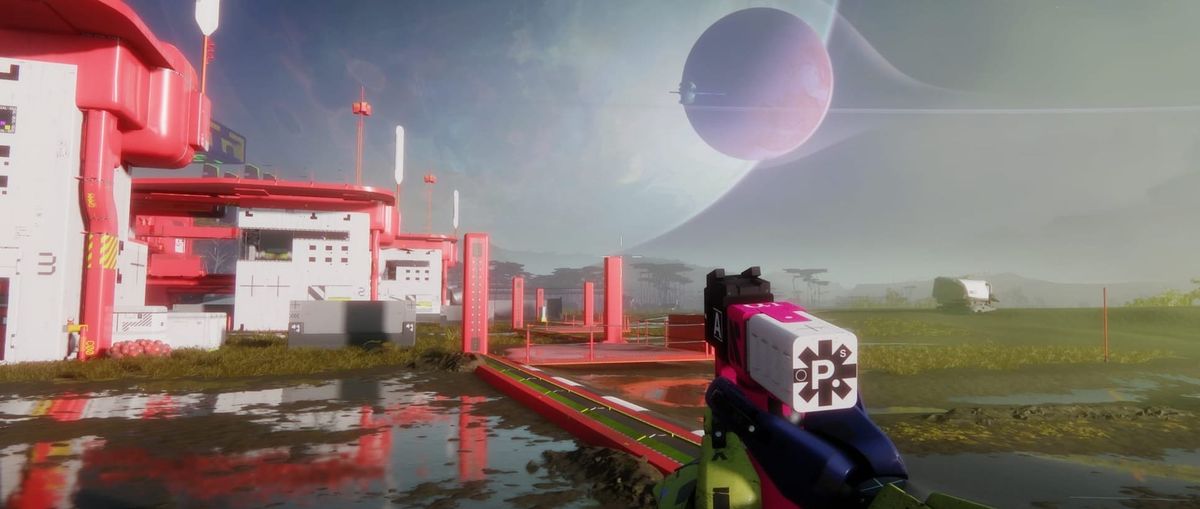
Marathon (Game)
The extraction shooter genre is having a moment right now. As a novice who has never tried Escape from Tarkov and merely scratching the surface of Hunt Showdown, the recently-released Arc Raiders has been my gateway into the genre. To summarize, the genre is oriented around players entering a PvPvE match to search and fight for valuable loot. Eventually, you will (ideally) extract to safety and secure your gains. If you die during the match, however, you lose everything you brought into the match, as well as any loot you might have acquired.
Enter Bungie's Marathon. With Sony's recent acquisition of Bungie, there was, perhaps, a lot riding on the commercial success of the game. Though I cannot speak to whether it was successful in that regard, I am floored by how much I adore this game – which is currently more than I enjoy Arc Raiders.
As someone who spent their formative years as a young gamer playing Halo 3, Bungie's gunplay feels phenomenal and that tactility is present here in Marathon. There is a punch in the combat that is hard to explain, but it just feels right. Combat is also novel through the use of a class-based system that has players choosing a "shell" with a specialization to assist oneself or their team. I have grown fond of the Recon shell and using it to gain intelligence regarding the surrounding area and potential nearby threats (runners and UESC alike). In addition to the surprisingly interesting lore with lots of background information to delve into, the world design in top-notch. I was hesitant about the aesthetic, but once immersed, I have come to adore the rich high-contrast and sleek level design. It's currently expressed through four maps: Perimeter, Dire Marsh, Outpost, and Cryo Archive. Each getting respectively more challenging to navigate and fight through (though I still have yet to even try Cryo Archive). As for the weaknesses of the game, let's start with tutorialization. The onboarding process for navigating Marathon is weird as hell and leaves a lot to be desired for a new player. I felt like I was thrown into this game with minimal guidance, which would be normally fine, but the next weakness of the game makes this more burdensome: the user interface. Navigating the menus, inventory slots, contracts, and skill trees is a goddam abomination. Seriously, extraction shooters are known for being obtuse inventory management and weird progression systems, but this is silly. Get these byzantine menus out of my face and let me play the fucking game. Because when I am actually playing it, I am having a blast!
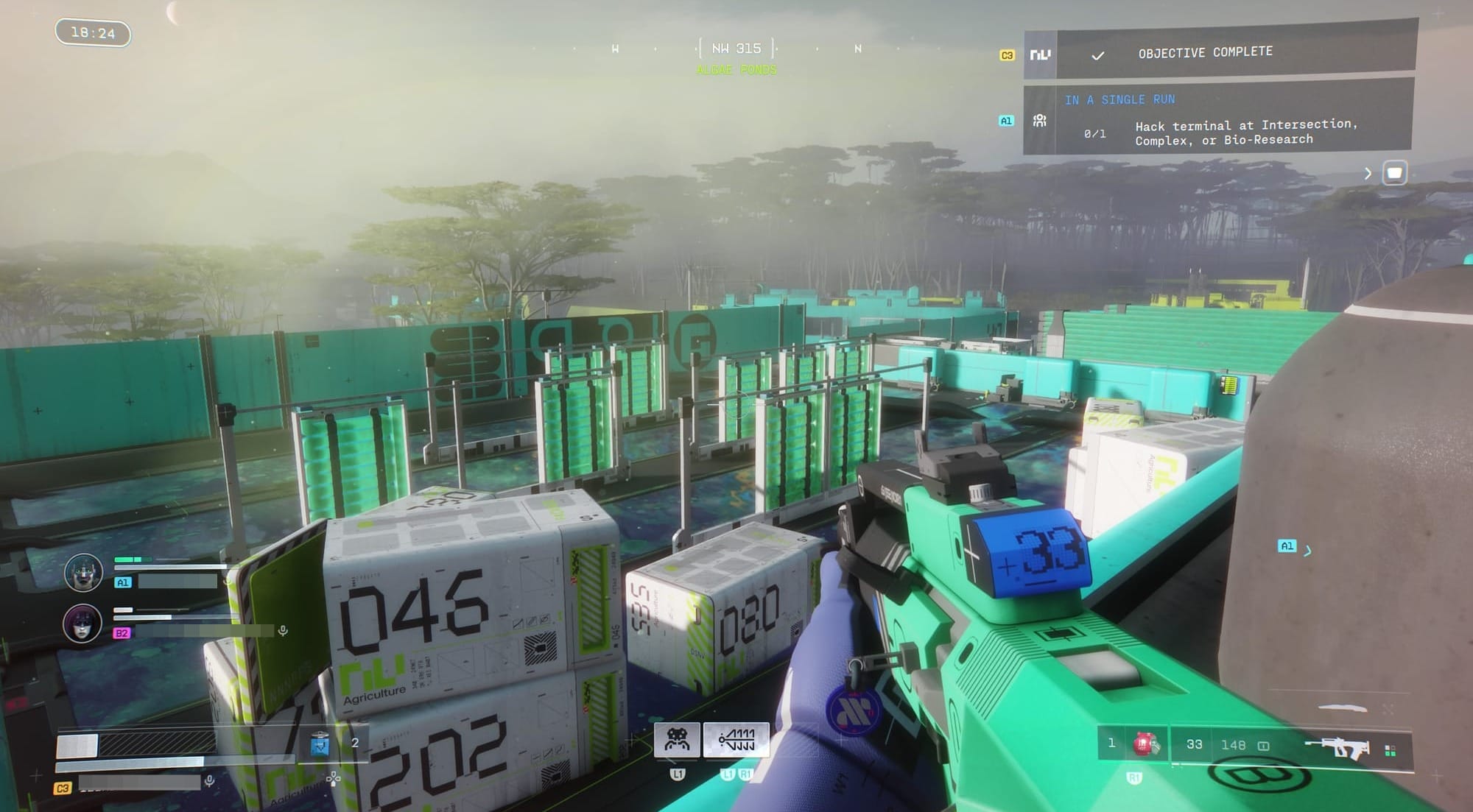
"Oh, let's third-party them."
- Me everytime after hearing two other teams fighting eachother.
Links, Longreads, and Video Essays
- FOAD Gang shows off some sick tricks on fixed gear bicycles.
- Someone's dad beats Dark Souls as his first video game.
- Dale Smith discusses our province's democratic backsliding and its connection to the UCP's assault on queer rights.